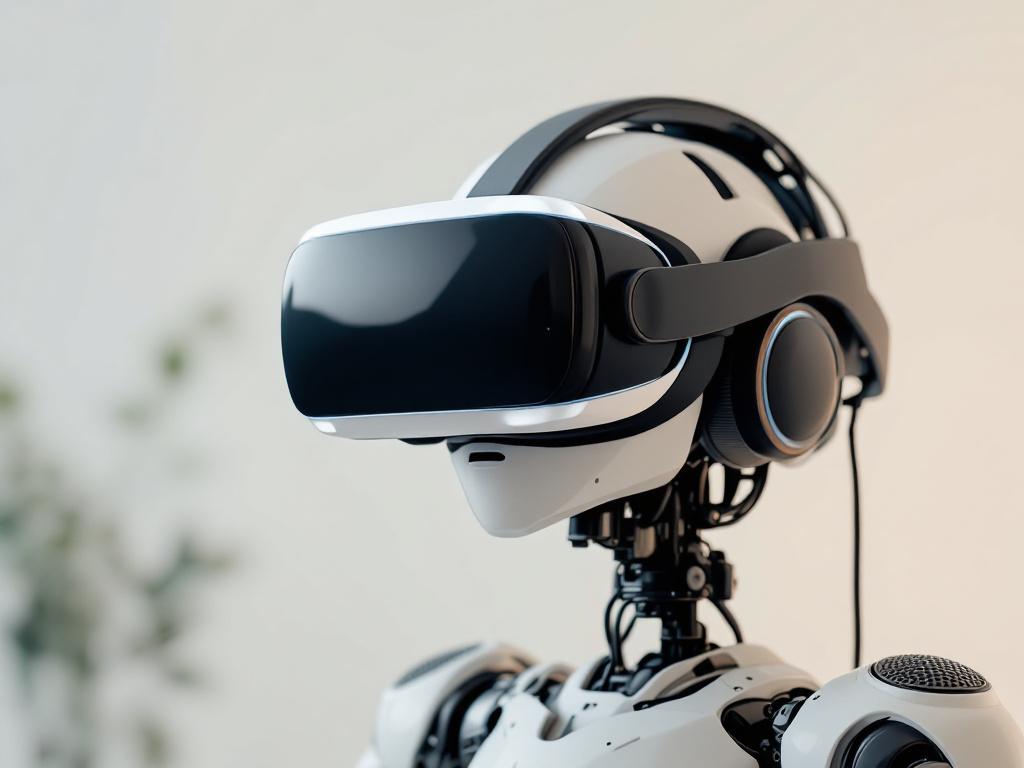
How Virtual Reality (VR) Can Enhance Robot Design and Testing
Virtual Reality in robotics development is reshaping how engineers approach design and testing. Traditionally associated with gaming and entertainment, virtual reality (VR) offers immersive, computer-generated environments that provide unprecedented opportunities in robotics. VR integrates seamlessly into the robotics field by creating risk-free spaces for design and testing, allowing engineers to visualize and interact with robots before any physical prototypes are built.
The benefits of integrating VR into robotics are vast. Engineers can enjoy faster design cycles, as VR enables them to quickly iterate on ideas and concepts. This not only accelerates the development process but also enhances safety by moving hazardous testing scenarios into a controlled virtual environment. The costs associated with robotics development are significantly reduced, as VR allows for detailed trials and error detections at a much earlier stage. Furthermore, because everything can be examined in a virtual space, the real-world performance of robots can be improved, paving the way for more efficient and reliable robotic systems.
In this blog, we will explore the many dimensions of how virtual reality is revolutionizing robot design and testing. From understanding the basics of VR technology to delving deep into how it's applied in robotics for both design and rigorous testing, we’ll uncover the profound impact of VR on the future of robot development.
Understanding Virtual Reality
Virtual reality (VR) provides immersive, computer-generated 3D environments that are experienced through equipment like head-mounted displays. These environments allow users to feel as though they are part of a different world, enabling them to interact with virtual objects in realistic ways. The core components of this technology include headsets, tracking systems, and input devices such as controllers and motion capture systems. Simulation software like Unity, Unreal Engine, Gazebo, and Webots plays a pivotal role in creating these virtual worlds, offering flexibility and depth in designing high-fidelity VR environments.
The evolution of virtual reality from a mere entertainment technology to a vital business tool demonstrates its versatility. Initially popularized through gaming and media experiences, VR has advanced into sectors like engineering, manufacturing, and healthcare for practical applications in training, simulation, and design. This shift is driven by the realization that VR can offer significant benefits in enhancing understanding and interaction within a simulated context.
In engineering and manufacturing, VR allows for the visual and functional assessment of designs without the need for physical prototypes. This capability provides the flexibility to experiment with different configurations, leading to better design decisions and outcomes. As VR continues to advance, its application within enterprises is expected to grow, influencing how products are developed and tested before meeting the real world.
These capabilities, naturally, extend into the field of robotics, where the fusion of VR technology with robotic design and testing processes opens new possibilities. It allows for the assessment and interaction with robotic designs prior to their physical implementation. This not only improves efficiency but also allows designers to simulate and rectify potential issues within a safe, cost-effective environment.
Virtual Reality in Robotics
In the realm of robotics, Virtual Reality (VR) in robotics involves engineers and designers stepping into a virtual environment meticulously designed to simulate both robot models and their operational settings at full scale. This integration allows engineers to experiment with robot functionalities in a setup that mirrors the real world, without incurring the large costs or risks associated with physical prototypes.
Virtual robots, enriched with physics engines and digital twins, allow for intricate testing and understanding of how robots would behave within the ecosystem they are designed for. The ability to interact with these robots in a detailed, virtual environment creates numerous advantages. For one, it allows for the early detection of design flaws, providing an opportunity to make adjustments long before any physical prototype is created. This proactive approach prevents costly design overhauls later in the development process.
Testing with VR also reduces the risk inherent in traditional testing environments. For complex or hazardous robotic operations, such as those in the manufacturing or rescue sectors, virtual environments mitigate these dangers by providing a safe space for testing without the risk of real-world failures or accidents. Moreover, the intuitive understanding gained from interacting with robots in a lifelike virtual setting goes beyond what's achievable on a 2D screen, offering a richer grasp of robot-environment dynamics.
VR in robotics is not only about improving design efficiency but also elevating the quality and reliability of the robots that make it to the production floor. By utilizing VR technology, engineers can ensure that robots are capable of meeting the challenges of their intended environments with greater success and safety.
VR for Robot Design
In the early stages of robot creation, VR for robot design offers unparalleled opportunities for conceptual design. Through virtual reality, engineers can immerse themselves in the intricate visualization of a robot's form factor, workspace, and overall ergonomics. This means they can examine and refine aspects like reachability, the ease of operator access, and how the robot interacts with its surroundings.
By using VR to iterate design elements such as size, joint placements, and sensor layout, engineers can refine a robot’s design at a 1:1 scale. This scale provides precise insights into potential design issues that may not be obvious during traditional design methods. The ability to visualize and manipulate three-dimensional aspects of a design ensures a thorough understanding of how the robot will function and interact with its environment.
VR extends further into the realms of prototyping & refinement. It allows CAD models of robots to be imported into the virtual environment. Engineers can inspect these models, annotate them, and conduct reviews with stakeholders, all while navigating through a life-size digital rendering of the robot. This capability allows for design sign-offs and manufacturing checks to occur with greater accuracy, avoiding common design flaws that may appear in later production stages.
The manipulation of different configurations is possible within VR. Engineers can test various payloads, tools, and end-effectors and assess their fit and function before even a single gram of material is cut or assembled. This kind of detailed pre-emptive design exploration ensures the final robot builds are only done with well-tested, reliable designs, minimizing waste and maximizing efficiency.
VR for Robot Testing
The application of VR for robot testing is transforming the traditional testing landscape by moving it into a virtual domain. This shift allows for interactive simulation prior to hardware development, in which robot control software is rigorously tested against high-fidelity virtual environments. By doing this, engineers can assess navigation and manipulation tasks as well as human-robot interactions, all enhanced with realistic physics and sensor-driven models.
These virtual testing scenarios enable the safe and cost-effective exploration of environments that would be challenging or dangerous to mimic in reality. High-risk domains such as nuclear facilities, construction sites, and healthcare benefit from conducting initial tests within a VR setup, avoiding potential hazards. The ability to simulate sensor failures, slippery surfaces, and crowded spaces allows engineers to refine robotic behaviors and improve robustness against edge-case scenarios.
Practical scenarios, such as the testing of warehouse robots in a VR-created distribution center or rehearsal of surgical procedures using surgical robots in VR, showcase the tangible benefits. For instance, a fleet of warehouse robots could navigate a virtual distribution center, ensuring the design works seamlessly for flow and efficiency before implementation. In healthcare, robotic surgery systems can be perfected in a structured, risk-free environment, soaking in vast amounts of variable data to ultimately enhance safety and precision when they transition to operating rooms.
Benefits of VR in Robot Development
The incorporation of Virtual Reality in robot development brings a wealth of significant benefits for engineers and development teams. By reducing the need for physical prototypes, costs naturally decrease, and development cycles are shortened. Iterative design testing becomes more accessible and frequent, leading to the early detection of any issues while still in the simulation stage, rather than during costly trial and error on the lab floor.
Furthermore, VR enhances collaboration among distributed teams who can virtually meet “inside” the robot and its simulated environment. This virtual meeting space allows for real-time sharing of annotations, conducting live design reviews, and co-debugging behavioral inconsistencies. The ease of collaboration smooths out the path for shared understanding and cooperative task allocation, which is critical in a field where precision is paramount.
Simulating real-world variables such as lighting conditions, terrain types, cluttered environments, and human behavior improves the development of better-performing and more robust robots. This ability to pre-program a robot's response to critical and rare situations is part of VR's offering, ensuring the robots are not just operational, but prepared for unforeseen circumstances. As a result, robots designed and tested within VR environments achieve enhanced real-world performance, meeting the demands of diverse and dynamic operating conditions with heightened reliability.
VR and Interactive Simulation in Robotics
At the intersection of cutting-edge technology and robotics lies the concept of interactive simulation in robotics. Here, humans and robots interact in real-time, within a well-crafted simulation. Virtual reality plays a critical role in enhancing these simulations, transforming how teleoperation, human-robot interface testing, and task execution are conducted.
VR facilitates natural, full-body interactions during simulations, allowing engineers to test teleoperated robots and refine control interfaces. By providing users with a more intuitive experience, VR enables realistic feedback regarding usability and safety within the simulation. This immersive interaction helps engineers understand human factors more deeply and allows them to tailor the robot interaction models accordingly.
Consider a teleoperated inspection robot controlled via VR or collaborative robots (cobots) programmed to interact with human workers in a virtual space. The detailed rehearsal of workflows and task distributions can substantially improve the efficiency and productivity of such systems. Similarly, mobile robots trained and tested within VR environments, such as warehouses or hospitals, can be evaluated for their effectiveness in navigating complex environments.
These interactive simulations encourage engineers to refine their designs, translate ideas from conception to practical application, and validate their approaches before making physical commitments. Robots are thereby better educated and more adept at fulfilling their real-world roles.
Challenges and Future Prospects
Although VR in robotics is rapidly advancing, it does come with its set of challenges. Current obstacles include the high cost and sometimes cumbersome nature of VR hardware, which can lead to user discomfort or motion sickness. Integration with existing robotics frameworks, such as the Robot Operating System (ROS), can also be complex and require extensive fine-tuning.
Another challenge is the creation and maintenance of accurate digital twins, which require precise data reflecting the robot's operational environments. This aspect necessitates a commitment to extensive data collection and curation. Moreover, training engineering teams to effectively utilize VR technology, which may lead to resistance or require significant change management, is a challenge that must be addressed.
Looking towards the future, tighter integration of VR with AI and robotic systems holds immense promise. Training machine learning agents in VR with the aim of deploying them to real robots could drastically improve the fidelity and utility of simulations. As VR platforms advance, offering higher-fidelity physics, improved sensor data simulation, and better alignment with reality, the transition from simulation to real-world application will become more seamless. Such gradations will encourage broader enterprise adoption of VR technology for collaborative design and remote operations, paving the way for lighter and more reliable VR devices.
What lies ahead is a future where VR is an indispensable component in robotics, promising more efficient, safer, and innovative design and testing methodologies.
Conclusion
Virtual reality is no longer just an add-on to robotics; it has become a core tool in the field. By accelerating the design cycle and enabling safer, more comprehensive testing environments, VR enhances collaborative efforts, leading to smarter robot designs and implementations.
In the development of robots that can tackle real-world challenges with greater precision and adaptiveness, VR plays a pivotal role. It elevates capabilities and assurances in design, development, and testing, ensuring the end products are not only more efficient but also highly dependable when faced with varied operational scenarios.
Call to Action
To fully realize the potential of VR in robotics, now is the time to experiment with VR-based simulation tools, embedding them into the existing development workflows. Consider pilot projects focused on design reviews, operator training, or virtual testing as initial steps to harness the full power of VR. Delve into tutorials and documentation for popular VR-robotics toolchains to better understand their application and benefits.
Exploring case studies from enterprises already using VR for training, design, or testing can provide insights and inspiration. As VR becomes more deeply ingrained in industry practices, those who adapt early will undoubtedly be at the forefront of engineering innovation and excellence. Take the step today to leverage VR in your robotic aspirations and exceed the boundaries of traditional development paradigms.