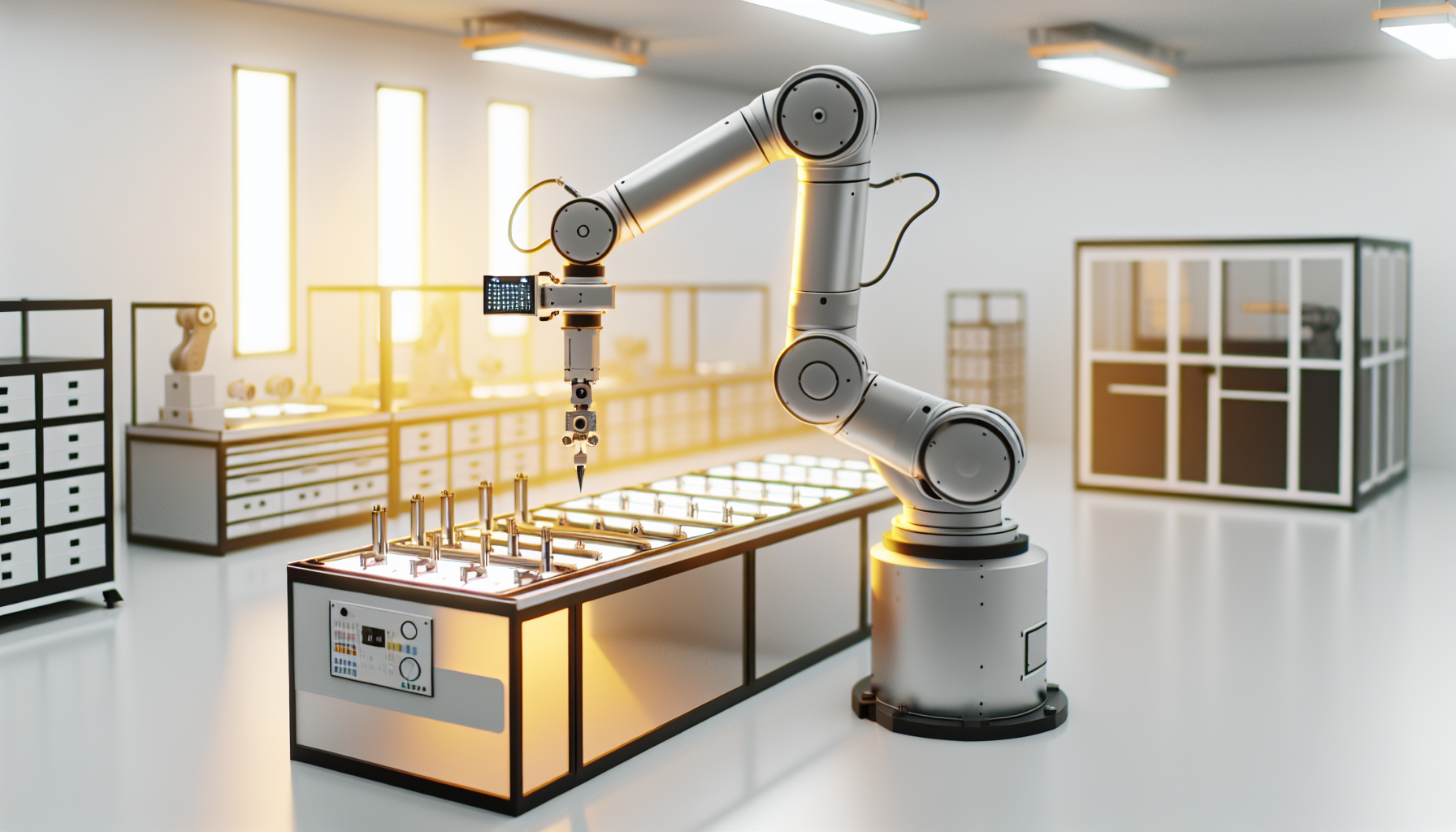
Revolutionizing Manufacturing: The Role of Robotics and AI in Smart Factories
In the past few years, the concept of smart factories has garnered a lot of attention as businesses in the manufacturing sector aim to improve efficiency, give customers more personalized options, and strengthen their operations against various challenges. Smart factories are advanced systems that incorporate technologies like the Internet of Things (IoT), Artificial Intelligence (AI), robotics, and big data. These technologies work together to create intelligent production environments. This blend of technology enables real-time data assessment, automation, and adaptable processes that significantly enhance production capabilities. As demands for swift production and intricate products increase, smart factories offer a road map to ensure competitiveness and resilience in today's global market. Through this blog post, you’ll gain a comprehensive understanding of how smart factories redefine digital transformation in the manufacturing world.
Understanding Smart Factories: Automation and Interconnectivity
Smart factories are often praised for their ability to transform traditional manufacturing approaches that rely heavily on manual processes. Unlike conventional setups, smart factories are digital powerhouses that allow machines to communicate seamlessly, make decisions autonomously, and monitor operations in real-time, all without much human intervention. These factories leverage a variety of interconnected technologies to achieve these capabilities.
- Internet of Things (IoT): IoT acts as the circulatory system of smart factories, allowing devices to share and collect data. This ensures that all machines are interconnected and capable of autonomous operation.
- Digital Twins: Digital twins are virtual replicas of real-world processes. They simulate scenarios to optimize performance, predict outcomes, and monitor the health of machinery. By doing so, they enable manufacturers to preemptively address issues before they escalate.
- Cloud Computing: Cloud technology serves as the backbone for data storage and analysis. It provides the necessary computational power and real-time access to information, facilitating decision-making.
With these technologies at the core, smart factories ensure more efficient production, reduced waste, and enhanced adaptability to accommodate changing market demands. For example, real-time monitoring provided by IoT can identify potential malfunctioning equipment, allowing for immediate interventions that minimize downtime.
The Role of Robotics in Smart Manufacturing
Manufacturing has experienced a revolutionary shift with the integration of robotics in smart factories. Robotics enhances nearly all production facets, from material handling to the precision of quality checks. In many instances, robots perform complex tasks once managed manually, bringing enhanced accuracy and speed.
- Material Handling: Autonomous mobile robots (AMRs) now undertake tasks like transporting goods across the factory floor, ensuring optimal resource use.
- Collaborative Robots (Cobots): These robots work alongside human workers, augmenting their capacity and handling repetitive tasks. Their safety measures and precision have minimized risks often associated with human labor.
- Inspection and Quality Control: Robotics automates high-speed inspections, ensuring that every product meets quality standards without delays, a task exemplified by Mitsubishi Electric's Thailand prototype factory, which applies AR/VR technology with robotics.
By optimizing resource utilization, reducing energy consumption, and minimizing waste, robotics in smart factories ensures operations are efficient and cost-effective. Moreover, the capacity for precision often surpasses human ability, enhancing product quality and lowering defects.
AI Integration in Smart Factories: Insights and Automation
Artificial Intelligence (AI) has established a formidable position within smart factories by driving decision-making, predictive maintenance, and defect management through extensive data analysis. Via machine learning algorithms, AI scrutinizes IoT sensor data to evolve insights promptly, allowing for autonomous adjustments in production.
- Predictive Maintenance: AI can predict potential equipment failures and service needs by monitoring machine health, thus preventing unexpected downtimes and extending the longevity of machinery.
- Defect Detection: Using AI, manufacturers can identify defects at early stages. AI systems can differentiate between normal and abnormal patterns in product lines, ensuring high-quality output.
- Decision-Making Support: With AI data models predicting market trends and risks, businesses make more informed decisions about supply chain operations and resource allocations.
Despite these advantages, AI integration faces challenges like cybersecurity threats due to increased connectivity. Protecting sensitive data from cyber threats requires robust IoT ecosystems and secure data management practices. Addressing these vulnerabilities ensures AI can operate safely, delivering a secure and empowering environment for innovation.
Industrial Automation: The Backbone of Smart Factories
At the heart of every smart factory lies industrial automation, which underpins every autonomous process. Through the amalgamation of sensors, control systems, and software, industrial automation surpasses traditional manufacturing environments.
- Productivity: Industrial automation provides a measurable impact by delivering a 10-20% increase in output across production lines. Automation reduces the risk of human error, ensuring consistency in quality and uptime.
- Human Error Reduction: With automation eliminating manual interventions, the chance of errors decreases, leading to higher quality products and reduced wastage.
- Capacity Unlocking: Automation can unlock up to 15% more capacity in production lines by optimizing space and resources.
Overall, industrial automation liberates human workers from mundane tasks and allows them to focus on more strategic roles, thereby boosting employee productivity by as much as 7-20%.
Digital Transformation in Manufacturing through Smart Factories
The journey towards smart factories is aided by a significant leap in digital transformation, which embraces digital tools like 5G and cloud analytics. These tools are paramount for smart factories seeking agility and transformation.
- 5G Network: High-speed connectivity from 5G supports real-time communication across devices, enabling rapid response times and facilitating remote access.
- Cloud Analytics: 70% of manufacturers have embraced cloud analytics for real-time data analysis, contributing to predictive maintenance and operational efficiency.
- IoT Integration: A seamless IoT environment interconnects machinery, fostering continuous information flow and process control, further enhancing productivity.
The digital transformation entails more than just technology enhancement; it encapsulates a cultural change that prompts manufacturers to rethink how they offer value. Manufacturers now embrace rapid changes with agility, leading to progressive innovation.
The Benefits of Smart Factories: Innovation and Value
Smart factories offer a slew of advantages that reimagine how businesses approach manufacturing. From cost efficiency to innovation, these benefits redefine competitive strategies.
- Cost Reduction: Waste minimization and resource optimization within smart factories result in significant cost savings. This frugality extends to labor, where up to 30% higher productivity is achievable by 2030.
- Customization and Flexibility: Through digital twins and adaptive processes, smart factories can deliver customized products based on real-time data, allowing businesses to meet individual client needs without compromising on speed.
- Safety: Enhanced safety protocols, facilitated by automation and remote operations, ensure workplace safety.
- Innovation and Productivity: Real-time data and automation have led to about 12% gains in both productivity and output, placing companies at the forefront of industry advancements.
In addition, smart factories encourage supply chain transparency and sustainability using green practices. Technologies like blockchain verify product provenance and promote ethical production practices.
Challenges and Considerations for Smart Factories
Despite the promising benefits, deploying smart factory technologies isn't without its hurdles. High initial investments and cybersecurity risks are primary considerations, alongside the need for workforce reskilling.
- Investment Costs: Implementing smart factory initiatives requires significant financial resources. Many manufacturers allocate over 20% of their budgets to related projects, reflecting the scale of investment.
- Cybersecurity: The hyper-connected nature of smart factories exposes them to cyber threats. To counteract these risks, industries must develop secure IoT systems.
- Workforce Reskilling: As AI and machine learning technologies become more prevalent, there is a growing need for employee training. Reskilling workers ensures they remain valuable and effective contributors in an evolving digital factory environment.
Strategies to mitigate these challenges encompass phased technological integrations, focusing on sustainable practices, and prioritizing human-centric models. Such an approach ensures that smart factories do not just chase innovation, but secure tangible economic and social benefits.
Envisioning the Future: Smart Factories and Industry Evolution
The potential for smart factories to revolutionize the manufacturing sector is immense. As industries aim for greater efficiency and adaptability, the adoption of smart technologies becomes non-negotiable for future competitiveness. By becoming an early adopter, manufacturers position themselves to leverage the full spectrum of advantages.
Embracing smart factory principles can substantially enhance agility, allowing manufacturers to respond promptly to burgeoning market demands. With a confluence of technology and innovation, these facilities are prepared to meet the evolving landscape of the manufacturing industry.
Call to Action: Future-Proofing Manufacturing with Smart Factories
In this rapidly changing industrial landscape, exploring smart factory solutions becomes imperative for manufacturers poised to remain leaders in Industry 4.0 and prepare for Industry 5.0. Organizations such as Siemens and SAP offer comprehensive smart factory technologies that enable industries to transition seamlessly into this new era.
Engage with industry experts and leverage comprehensive resources to gain deeper insights into the potential of smart manufacturing. By understanding the nuances of smart factories and their solution paths, manufacturers can navigate this transformation path with confidence and foresightedness.
FAQ Section
1. What are some examples of technologies used in smart factories?
Smart factories utilize a variety of advanced technologies, including:
- IoT (Internet of Things): Connects devices for data communication.
- AI (Artificial Intelligence): Analyzes data for predictive maintenance and quality control.
- Robotics: Automates tasks and collaborates with human workers.
- Cloud Computing: Stores and processes data remotely.
- Digital Twins: Simulate real-world processes for optimization.
2. How do smart factories enhance product customization?
Smart factories enhance customization by utilizing digital twins and real-time data analysis. These technologies allow manufacturers to tailor production lines quickly and efficiently to meet specific customer demands, offering flexibility without slowing down operations.
3. Can small businesses implement smart factory technologies?
Yes, small businesses can benefit from implementing components of smart factory technologies. While the infrastructure can be capital-intensive, starting with scalable options like IoT for monitoring and cloud solutions for data management can provide incremental improvements in efficiency and cost savings.
4. What workforce changes are necessary for transitioning to smart factories?
Transitioning to smart factories requires workforce reskilling and upskilling. Employees need training in data analysis, technology management, and problem-solving to efficiently operate and maintain new systems. Continuous learning programs are vital for adapting to evolving technologies.
5. How is sustainability addressed in smart factories?
Smart factories incorporate sustainability by:
- Minimizing waste through precision production.
- Using energy-efficient machines.
- Enhancing supply chain transparency through blockchain.
- Implementing IoT for efficient resource management.
These efforts result in a reduced environmental impact while maintaining high production standards.