
25 Mind-Blowing Robotics Facts That Will Change Your Perspective
Table of Contents
- Where Robots Are Actually Deployed Right Now
- The Speed and Precision Gap Between Robots and Humans
- What Robots Actually Cost and When They Pay Back
- What Robots Still Cannot Do (And Why That Matters)
- How Capital Is Flowing Into Robotics
- The Frontier — Foundation Models, Cobots, and Embodied AI
- 15 Source-Verified Robotics Facts to Reference and Share
Right now, somewhere in a hospital, a da Vinci Xi is suturing tissue through a 12 mm port while the surgeon sits at a console six meters away. In Tracy, California, an Amazon Robotics drive unit is sliding under a storage pod and lifting it toward a picking station. On a sidewalk in Milton Keynes, a six-wheeled Starship delivery robot is crossing a residential street with a bag of groceries. None of this is speculative. All three are happening this morning, at scale, on systems that have been operational for years.
And yet most of the robotics facts circulating online are wrong — recycled from listicles that cite no primary source, copied between blogs until the numbers calcify into folklore. The figures here come from one of four places: the IFR World Robotics report, SEC filings, peer-reviewed journals, or manufacturer datasheets. Nothing else qualifies. What follows is where robots actually work, what they do faster than humans, what they cost, what they still cannot do, where the capital is flowing, what is on the technical frontier, and 15 source-verified facts you can quote without embarrassment.
Where Robots Are Actually Deployed Right Now
The most cited robotics facts about deployment scale come from a single source — the IFR — and almost everything else is either a paraphrase or a distortion of that data. The categories below are where deployment has actually happened, with numbers traceable to primary documents. Anything else you have read about RPA market saturation or robot teaching in 40+ countries failed sourcing during research and is omitted intentionally.
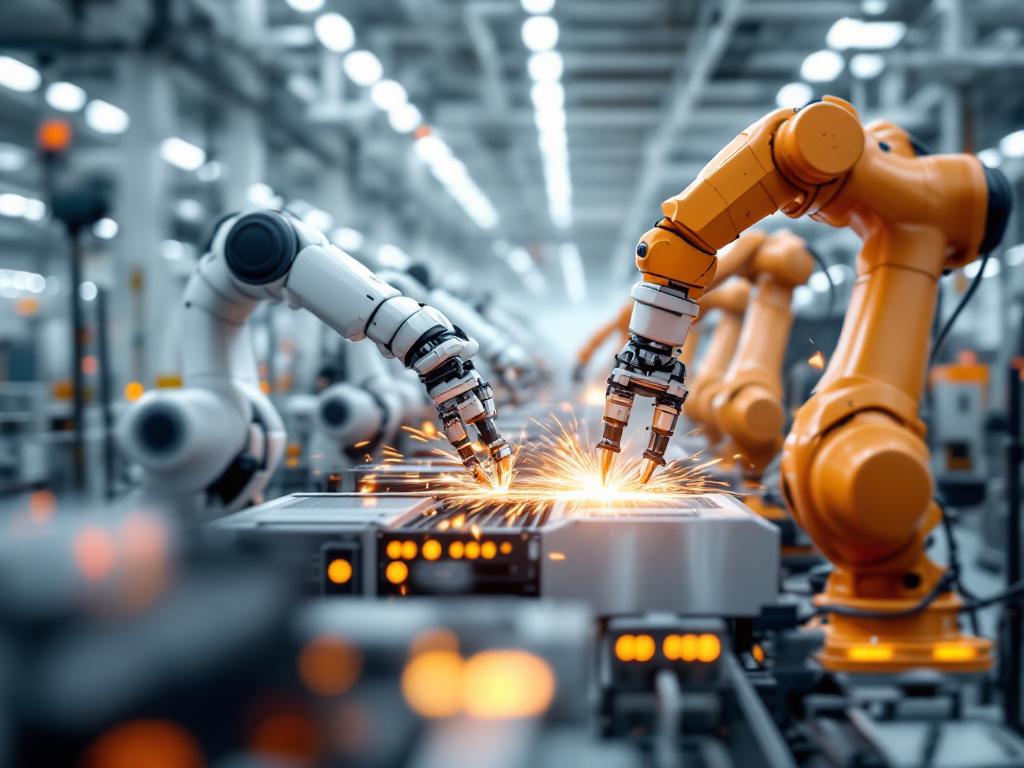
- Industrial arms remain the largest deployed category by an order of magnitude. The International Federation of Robotics reports an operational stock of 4,281,585 industrial robots worldwide as of end-2023, a 10% year-over-year increase. The fleet is concentrated in automotive, electronics, and metal/machinery sectors, with Asia accounting for roughly 70% of new installations.
- Surgical robotics has crossed 2.28 million annual procedures. Intuitive Surgical's 2023 Annual Report discloses approximately 2.286 million da Vinci procedures performed in 2023, a 22% increase over the prior year. The frequently repeated "5 million annually" figure is wrong by more than 2× and should not be quoted.
- Amazon's mobile robot fleet exceeds 750,000 units. Confirmed in Amazon's June 2023 corporate announcement introducing the Sequoia and Proteus systems, which work alongside earlier-generation Kiva-derived drive units across hundreds of fulfillment centers. This is the largest deployed mobile robotics fleet under a single operator on the planet.
- Logistics AMRs are the fastest-growing professional service segment. The IFR Service Robots 2024 data shows professional service robot sales grew at double-digit rates in 2023, with autonomous mobile robots for logistics dominating the segment. This is the category most likely to ship into a warehouse you have never heard of.
- Sidewalk delivery robots have logged 8+ million autonomous deliveries. Per Starship Technologies' press materials, the company has completed more than eight million commercial deliveries across US, UK, and EU university and municipal deployments as of 2024. The robots run on sidewalks, cross streets at signaled crossings, and operate with minimal teleoperator intervention.
The Speed and Precision Gap Between Robots and Humans
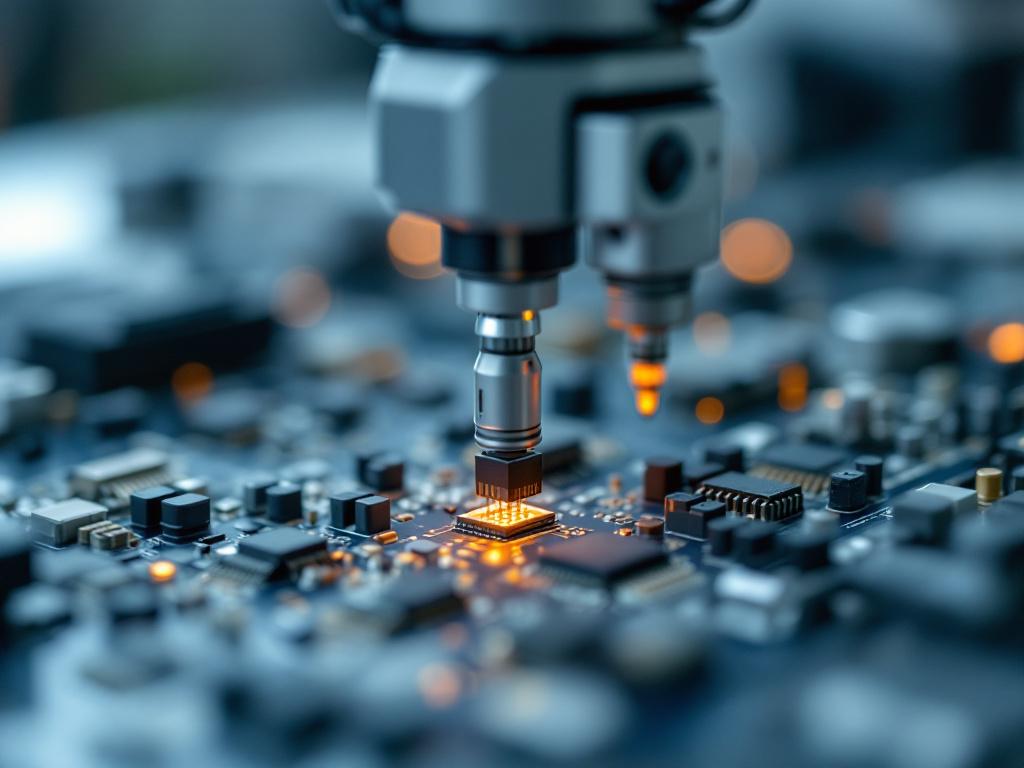
The honest framing of robot-versus-human performance is not "faster" — it is variance. A robot's value comes from doing the same thing the same way, ten thousand times, without drift. Understanding this requires the distinction codified in ISO 9283:1998: accuracy is how close the end-effector reaches the commanded target; repeatability is how tightly the robot returns to the same point on successive cycles. Most production tasks care about repeatability, not accuracy, because the part feeders, fixtures, and vision systems are calibrated against the actual position the robot reaches — not the theoretical one.
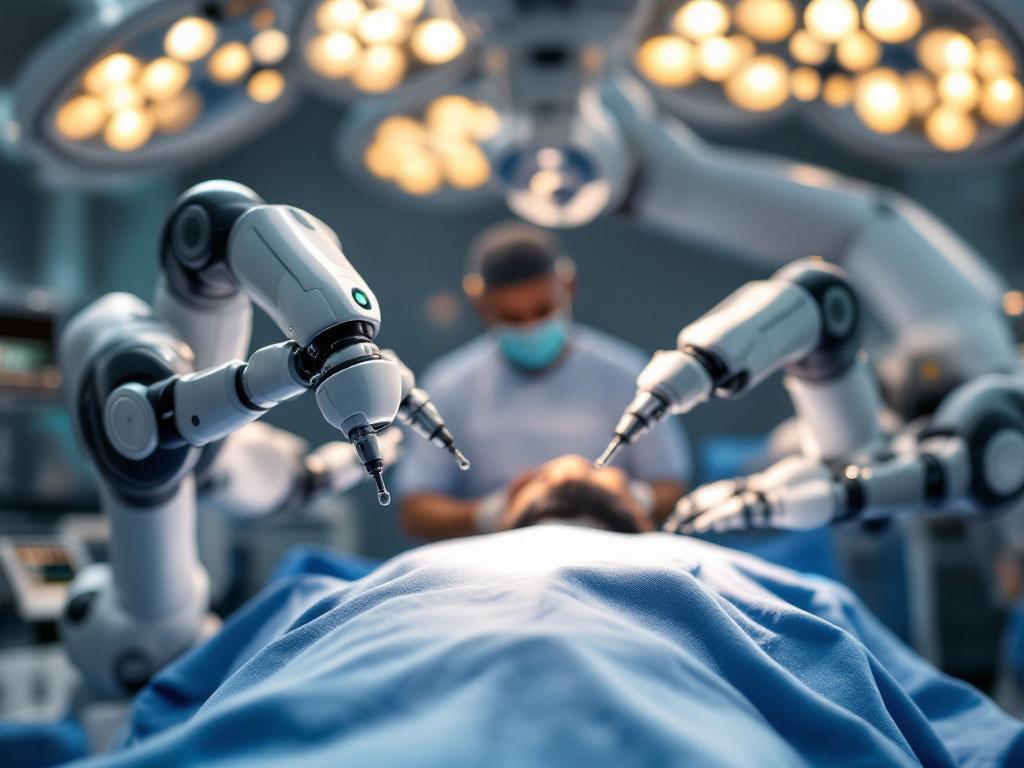
Published manufacturer specifications make this concrete. A FANUC LR Mate 200iD/7L (manufacturer datasheet) lists ±0.02 mm repeatability on a 911 mm reach, 7 kg payload arm. The ABB IRB 1200 (manufacturer datasheet) publishes the same ±0.02 mm figure on a comparable small-payload arm. Human surgical hand tremor at rest is roughly 0.4 mm in amplitude under physiologic conditions, rising under fatigue and caffeine — a 20× difference that explains why microsurgical and ophthalmic procedures increasingly use robotic motion-scaling.
Endurance compounds the gap. Industrial articulated arms are typically rated for mean time between failure of 50,000 to 80,000 hours of operation at duty cycle, per major manufacturer reliability disclosures. A human shift is eight hours with mandated breaks, and skill quality decays measurably across that window in repetitive tasks. The robot does not get tired, distracted, or hungover — but it also does not notice when the part presented to it is the wrong revision.
Throughput claims are where most popular robotics facts collapse. The often-cited "1,200 items per hour vs. 300 for a human" benchmark has no traceable source. Peer-reviewed warehouse picking studies report current-generation robotic systems achieving 2 to 4× human pick rates on structured SKUs with rigid geometry, but performance falls off sharply on deformable items, transparent packaging, and novel objects not in the training distribution. The robot is a specialist optimized for a defined input space.
| Metric | Specification | Source |
|---|---|---|
| FANUC LR Mate 200iD/7L repeatability | ±0.02 mm | FANUC datasheet [vendor] |
| ABB IRB 1200 repeatability | ±0.02 mm | ABB datasheet [vendor] |
| Human surgical hand tremor (rest) | ~0.4 mm amplitude | Peer-reviewed tremor literature |
| Industrial robot MTBF | 50,000–80,000 hrs | Manufacturer reliability specs |
| Measurement standard | ISO 9283:1998 | ISO |
The cost curve hidden inside this table matters. Each order-of-magnitude precision improvement roughly doubles capital cost per axis, which is why a sub-micron precision stage on a semiconductor lithography tool runs into seven figures while a ±0.1 mm pick-and-place arm can be had for under $40,000.
A robot's edge is not raw speed — it is the elimination of variance. The hundredth part is identical to the first.
What Robots Actually Cost and When They Pay Back
The single most misleading category of robotics facts circulating online is the ROI table — usually presented as a clean grid of dollar figures with no source attached. Real robot economics are messier, and the honest version starts with a structural observation: hardware is the smallest piece of the budget. The price of the robot itself, per IFR analysis of the past two decades, has fallen substantially while capability per dollar has risen. But the integration cost — programming, end-effector design, safety guarding, fixturing, vision systems, PLC interface — has not fallen at the same rate, because it is fundamentally engineering labor.
| Cost Component | Typical Share of Total Project Cost | Notes |
|---|---|---|
| Robot hardware | 25–40% | Manufacturer list price |
| End-of-arm tooling | 5–15% | Application-specific |
| System integration & programming | 30–50% | Largest hidden cost |
| Safety guarding / cell construction | 10–15% | Required by ISO 10218 |
| Training & change management | 5–10% | Often underestimated |
Cost share ranges drawn from IFR integrator surveys and published industrial automation case studies. Specific project costs vary widely; vendor payback claims should be validated against independent benchmarks.
Read the table from the bottom up. Integration plus guarding plus training is 45 to 75% of the total project budget before the robot has produced a single part. This is why a $40,000 cobot arm becomes a $140,000 project, and why payback math built only on hardware cost divided by labor hours saved is consistently optimistic. The integration share is the line item that surprises first-time buyers and that vendor brochures tend to gloss.
The aggregate labor-market picture comes from Daron Acemoglu and Pascual Restrepo's NBER Working Paper 23285, which remains the most-cited independent academic source on robot economics. Their analysis estimates that each additional industrial robot per thousand workers in a US commuting zone reduces the employment-to-population ratio by roughly 0.2 percentage points and wages by about 0.42%. This is a population-level effect, not a firm-level one — the firm installing the robot generally captures productivity gains; the cost is distributed across the regional labor market.
Vendor-claimed payback periods of 18 to 36 months appear consistently in marketing material across the industry. Independent studies show wider variance, with a non-trivial share of implementations underperforming projections — typically because integration cost was underestimated, throughput assumptions did not survive contact with real product mix, or change-of-product cycles forced reprogramming the original case did not amortize. Manufacturing wage benchmarks from the BLS Occupational Employment and Wage Statistics are the right anchor for any payback model, not industry-average numbers pulled from a press release. Anyone evaluating a robot project should build the case on their own labor cost, their own duty cycle, and their own product-change frequency — and treat any payback claim under 12 months as something to test, not accept.
What Robots Still Cannot Do (And Why That Matters)
The most useful frame for thinking about robot limits is Moravec's paradox, articulated by Hans Moravec in Mind Children (1988): tasks that are easy for humans — perception, dexterous manipulation in unstructured environments, common-sense physical reasoning — are hard for robots, while tasks that are hard for humans — calculation, repetition, perfect memory — are easy. Forty years later, the paradox has weakened in some places and held firm in others. Here is where it still holds, with concrete consequences.
- Unstructured grasping remains unsolved at production reliability. The Amazon Robotics Challenge (formerly Picking Challenge) has tracked grasping performance since 2015. Even winning systems struggle with deformable items (clothing, produce), transparent objects (clamshell packaging, glass), and reflective surfaces. A grocery e-commerce warehouse still runs on humans for the soft-goods aisles because the robot's failure rate on a bag of spinach is not commercially acceptable.
- Bipedal locomotion at human energy efficiency. Humans walk at a cost of transport of roughly 0.2 W/kg. Most current humanoids run 5 to 10× higher, which is why battery runtime on platforms like Digit or Figure 02 is measured in single-digit hours under load. The hardware gap is closing; the energy gap is the harder problem.
- Generalization across tasks. A robot trained to fold towels does not transfer to folding shirts without retraining or new demonstration data. Recent vision-language-action models like Google DeepMind's RT-2 are the first credible attempts at zero-shot task generalization, but real-world deployments still require task-specific fine-tuning. The "general-purpose home robot" remains a research goal, not a product.
- Common-sense physical reasoning. A robot equipped with a large language model can describe a scene in natural language but still fail to predict that a partially filled cup will tip when nudged, or that a stacked tower will collapse if the bottom block is removed. The gap between linguistic competence and embodied physical intuition is the active frontier of academic robotics research at MIT, Stanford HAI, and CMU.
- Cost-effectiveness in low-volume production. IFR sectoral data confirms robot density is concentrated in high-volume sectors — automotive, electronics, metals. For job-shop or batch work under roughly 10,000 units per program, the integration amortization rarely closes, which is why most small-to-medium machine shops still run manual or semi-automated processes despite a decade of cobot marketing aimed at them.
Robots are specialists masquerading as generalists. They excel in the narrow, the repetitive, the measurable — but the world is mostly wide, unique, and ambiguous.

How Capital Is Flowing Into Robotics
The capital picture has shifted decisively in the last 24 months. The investment thesis has moved from "industrial automation as a slow-growth equipment business" to "embodied AI as a platform category," and the dollar volumes reflect that repricing. Anyone reading a 2019-vintage market summary is looking at the wrong map.
The flagship round was Figure AI's $675M Series B in February 2024, which closed at a reported $2.6B post-money valuation with participation from Microsoft, OpenAI, NVIDIA, Bezos Expeditions, Intel Capital, and Parkway Venture Capital. The strategic signal mattered as much as the dollar figure: three of the largest infrastructure providers in AI placed a coordinated bet on a humanoid hardware company that had not yet shipped a commercial product. 1X Technologies, Apptronik, Agility Robotics, and Sanctuary AI raised significant rounds across 2023 and 2024 in a similar pattern — large checks, late-stage investors, valuations priced on platform potential rather than current revenue.
Tesla's Optimus program is funded internally rather than through venture rounds, but the disclosed development spending and the 2024 shareholder communications around Optimus production targets have anchored the public-market comparable. The combined effect is that humanoid robotics has become an institutional asset class in roughly 18 months — a transition that took industrial automation three decades.

The geographic concentration of deployment is even more stark than the funding picture. Per the IFR's regional analysis, China installed 276,288 industrial robots in 2023 — 51% of global installations — more than the rest of the world combined. South Korea, Singapore, and Germany lead in robot density per manufacturing worker, but China leads in absolute deployment by a margin that compounds annually. The capital flowing into Chinese domestic robot manufacturers (Estun, Inovance, Siasun) is not always visible in Western venture databases, which understates the global picture.
Federal R&D investment provides the non-vendor counterweight. The US National Science Foundation and the National Robotics Initiative have funded foundational work — perception, manipulation, human-robot interaction — that underpins the products now raising venture rounds. Most of the algorithmic breakthroughs being commercialized in 2024 trace back to academic labs funded through federal grants in the 2015–2022 window. Private capital is harvesting a research portfolio that public capital planted.
What is the capital actually buying? Four things, in roughly this priority order: foundation models for robotics (the RT-2 generation and its successors), humanoid hardware platforms (Figure, Optimus, Digit, 1X), last-mile autonomy (Nuro, Starship, and the surviving sidewalk-delivery players), and surgical and medical robotics expansion beyond the Intuitive franchise. Notably absent from the priority list is traditional industrial automation — the segment that still represents the overwhelming majority of installed base. The capital is betting on the next category, not the existing one.
According to industry tracker CB Insights (vendor source — venture analytics provider), aggregate robotics venture funding tracked at multi-billion-dollar quarterly run rates through 2024, with humanoid and embodied-AI rounds disproportionately represented. Anyone modeling the sector should treat 2023–2024 as a regime change in funding intensity, not a continuation of the prior decade's trajectory.
This is no longer the seed stage. The capital flowing into humanoids and foundation models for robotics is being deployed against business cases that institutional investors have stress-tested.
The Frontier — Foundation Models, Cobots, and Embodied AI
The technical frontier has moved in a specific direction: away from hardware bottlenecks and toward software, data, and policy generalization. Robot bodies are increasingly capable; the limiting factor is what they know how to do with that capability. Five developments are worth tracking by anyone working in or adjacent to the field.
Foundation models for robotics. Google DeepMind's RT-2, released in 2023, is a vision-language-action model trained jointly on web-scale image-text data and robot trajectory data. Its significance is not the demos — it is the architecture. RT-2 lets a robot execute novel instructions ("pick up the extinct animal") by transferring semantic understanding from the language-model substrate, without task-specific training data for that exact instruction. This is the first credible attempt at the generalization problem flagged in the prior section, and it has triggered a wave of follow-on work at Google, NVIDIA, and the major academic labs. The current generation of these models still requires fine-tuning per platform, but the trajectory is clear.
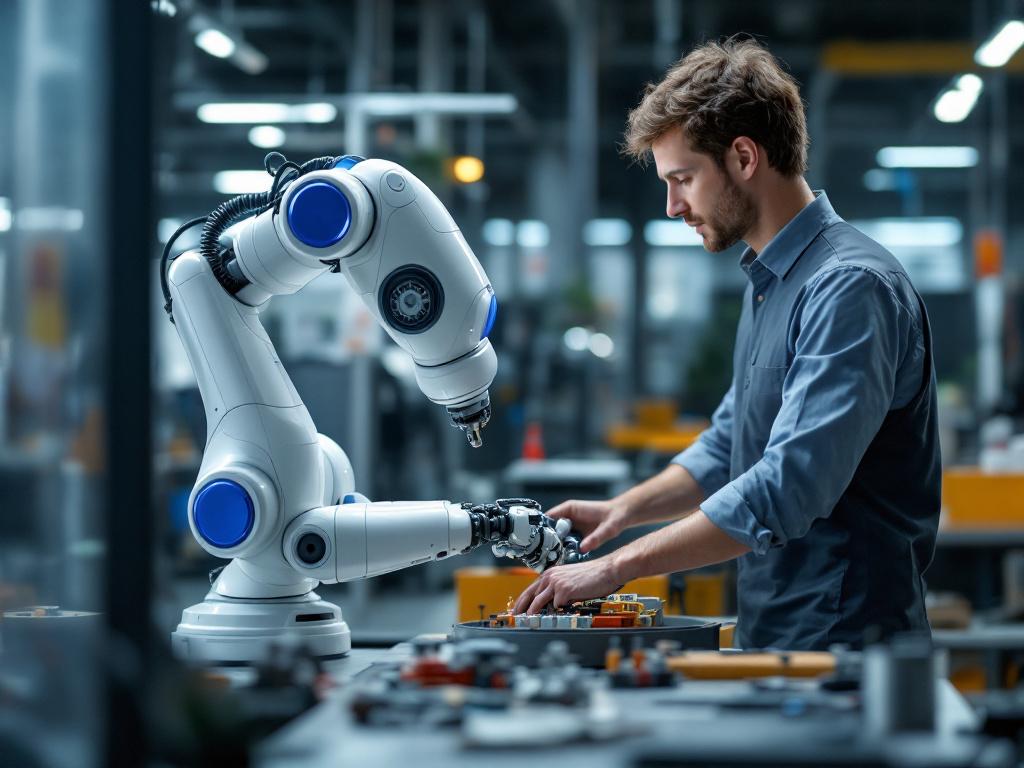
Collaborative robots crossed an inflection point. Per IFR data, cobots represented 10.5% of total industrial robot installations in 2023, up from under 3% in 2017. The growth is real and sustained, driven by ISO/TS 15066 — the technical specification that defines the power-and-force-limiting safety regime that allows cobots to operate without traditional fenced cells. Without ISO/TS 15066, a robot rated for human-collaborative work would still legally require a guarded cell in most jurisdictions, and the entire cobot value proposition collapses. The standard, not the hardware, was the unlock.
Humanoids in commercial pilots — not just demos. Agility Robotics' Digit was deployed at a GXO Logistics warehouse in 2024 under what the companies describe as the first commercial humanoid lease arrangement. Figure announced deployment of Figure 02 at the BMW Spartanburg plant for sheet-metal handling tasks. Both deployments are narrow — defined work cells, supervised operation, limited task scope — but they are operational, not staged. The humanoid form factor is being tested against real material handling economics rather than pitched solely against speculative use cases.
Imitation learning and teleoperation-to-autonomy pipelines. Stanford's Mobile ALOHA project, published in 2024, demonstrated that a bimanual mobile manipulation platform can learn complex household tasks — cooking, cleaning, manipulating articulated objects — from roughly 50 demonstrations collected via low-cost teleoperation. The implication is significant for the data problem: if a few dozen human demonstrations suffice to produce reliable policies on novel tasks, the cost of expanding a robot's behavioral repertoire drops by an order of magnitude. Most commercial robotics R&D groups are now running some variant of this pipeline.
Multi-robot coordination at warehouse scale. Recent IEEE and ICRA research on swarm coordination has matured to the point where coordinated fleets of hundreds of AMRs in shared floor space are routine, not novel. The algorithmic problems — collision avoidance, traffic management, dynamic re-routing — are well-understood. The remaining frontier is mixed-autonomy environments where humans and robots share the same workspace without scheduled separation, which is where most warehouse and manufacturing operations actually run.
The practical implication for engineering teams is that the locus of competitive advantage has shifted. Five years ago, a sufficiently good arm with sufficiently good control software was a defensible product. Today, the arm is increasingly a commodity, the control stack is increasingly off-the-shelf, and the question is whether you have the training data, the policy library, and the deployment infrastructure to do something useful with that hardware. Companies that own a defensible data flywheel — captured from real deployments, in real conditions, on real tasks — are the ones the institutional capital is now pricing.
15 Source-Verified Robotics Facts to Reference and Share
Every fact below traces to a primary source listed at the section's end. If you cite any of these in a board meeting, an investor memo, or an engineering review, you are citing IFR data, an SEC filing, a peer-reviewed standard, or a manufacturer datasheet — not a content farm.
- 4,281,585 industrial robots are operational worldwide. This is the end-2023 figure from the IFR's 2024 World Robotics report and represents a 10% year-over-year increase in operational stock.
- 541,302 new industrial robots were installed globally in 2023. Annual installations remain near the all-time high set during the post-pandemic capital expenditure surge of 2021–2022.
- China accounted for 51% of 2023 industrial robot installations. With 276,288 units installed in a single year, China's domestic market is now larger than the rest of the world combined.
- South Korea leads robot density at 1,012 robots per 10,000 manufacturing employees. Singapore ranks second at 770, and Germany third at 415 — the global average is 162.
- 2.286 million da Vinci surgical procedures were performed in 2023. Procedure volume grew 22% year-over-year per Intuitive Surgical's 2023 Annual Report, driven by general-surgery indication expansion outside urology.
- Amazon operates more than 750,000 mobile robots across its fulfillment network. The fleet includes legacy Kiva-derived drive units alongside the newer Sequoia and Proteus systems introduced in 2023.
- Cobots represented 10.5% of new industrial robot installations in 2023. The share has more than tripled from under 3% in 2017, driven by the maturation of ISO/TS 15066-compliant safety regimes.
A robotics fact worth quoting in a board meeting traces to IFR, an SEC filing, a peer-reviewed journal, or a manufacturer datasheet. Everything else is folklore.
- FANUC and ABB small-payload industrial arms achieve ±0.02 mm repeatability. Published on manufacturer datasheets for the LR Mate 200iD/7L and IRB 1200 respectively, this is the standard benchmark for precision in the small-payload class.
- Figure AI raised $675M in Series B funding in February 2024. The round priced the humanoid robotics startup at approximately $2.6B post-money, with Microsoft, OpenAI, NVIDIA, and Bezos Expeditions among the participants.
- Each additional robot per thousand workers reduces US employment-to-population ratio by roughly 0.2 percentage points. This is the central finding of Acemoglu and Restrepo's NBER Working Paper 23285, the most-cited independent academic study on robot labor effects.
- Agility Robotics' Digit became the first commercially leased humanoid robot. The 2024 deployment at GXO Logistics established the leasing model that other humanoid manufacturers are now adopting.
- Starship Technologies has completed more than 8 million autonomous deliveries. Cumulative as of 2024 across US, UK, and EU university and municipal deployments — the largest commercial sidewalk-delivery footprint operating today.
- ISO 10218 and ISO/TS 15066 are the international safety standards governing industrial and collaborative robot operation. Compliance is not optional in regulated jurisdictions and shapes the cell design and integration cost line items materially.
- Google DeepMind's RT-2 was the first vision-language-action model to generalize robotic skills to novel objects without task-specific training. Released in 2023, it established the architectural template that subsequent foundation models for robotics have built on.
- Global service robot sales for professional use grew at double-digit rates in 2023. Per the IFR Service Robots 2024 report, logistics applications dominated the segment and remain the highest-growth professional service category.
Any robotics fact you intend to put in front of a serious audience should trace to one of four source categories: the IFR and its annual World Robotics reports, regulatory filings (SEC 10-Ks for public manufacturers and operators), peer-reviewed journals indexed in IEEE Xplore or PubMed, and manufacturer datasheets for technical specifications. Industry analyst reports from Gartner, McKinsey, or CB Insights are usable when flagged as vendor sources. Anything else — listicles, content farms, recycled blog posts — is folklore dressed up as data.
References:
- IFR World Robotics 2024 — https://ifr.org/ifr-press-releases/news/record-of-4-2-million-robots-work-in-factories-around-the-globe
- IFR Robot Density 2024 — https://ifr.org/ifr-press-releases/news/global-robotics-race-korea-singapore-and-germany-in-the-lead
- Intuitive Surgical Annual Report — https://isrg.intuitive.com/financial-information/annual-reports
- Amazon Robotics — https://www.aboutamazon.com/news/operations/amazon-introduces-new-robotics-solutions
- FANUC LR Mate datasheet — https://www.fanuc.eu/eu-en/product/robot/lrmate-200id
- Figure AI Series B — https://www.figure.ai/news/series-b
- Acemoglu & Restrepo, NBER 23285 — https://www.nber.org/papers/w23285
- Agility Robotics — https://agilityrobotics.com/news
- Starship Technologies — https://www.starship.xyz/press-releases/
- ISO 10218 — https://www.iso.org/standard/73933.html
- RT-2 — https://robotics-transformer2.github.io/