Policy-Based Reinforcement Learning Explained: The Engine Behind Modern Robot Skills
Your warehouse robot needs to grasp a novel SKU it has never seen. Your quadruped needs to walk on a surface that wasn't in its training set. Your manipulator needs to assemble a part with 2mm tolerances under variable lighting. Hardcoding every scenario explodes combinatorially. Hiring a four-person ML team costs $1.2M+ annually and takes 9–18 months to ship a first policy. Meanwhile, teams using simulation-first pipelines are training new robot skills in hours. The differentiator isn't talent — it's understanding what policy based reinforcement learning actually does, when it earns its complexity, and what infrastructure makes "training in hours" real instead of marketing.
By the end of this piece, you will know whether PBRL fits your deployment timeline, which variant matches your task, and what infrastructure makes hours-scale training real instead of marketing.
Table of Contents
- Why Hardcoded Robot Behavior Breaks at the Edges
- How a Policy Actually Learns — and Why It's Different from Value-Based RL
- The Three Variants of Policy-Based RL Robotics Teams Actually Ship
- Why Simulation-First Training Is the Only Path to Hours-Not-Quarters Deployment
- The Five Conditions That Determine Whether a Sim-Trained Policy Works on Real Hardware
- The Reproducibility Tax — Where Policy-Based RL Still Bites Back
- Five Questions to Audit Whether Your Project Is Ready for Policy-Based RL
Why Hardcoded Robot Behavior Breaks at the Edges
The traditional robotics control stack is a layered cake of hand-tuned PID loops, behavior trees, scripted state machines, and explicit if/then rules sitting on top of feature engineering. It works beautifully inside a bounded box. Pick the red part from bin A, place at fixture B. Tighten a screw with known torque on a fixture that never moves. For these problems, classical control ships faster, runs deterministically, and costs less to maintain than any learned alternative.
The wall hits when the environment varies. A grasp controller hardcoded for cylindrical objects fails on irregular SKUs. A navigation stack tuned for one warehouse layout needs re-tuning when shelving moves a meter to the left. Force-control parameters that work at 20°C ambient drift at 35°C. None of these are exotic edge cases — they are Tuesday in a production deployment. Each one demands a human in the loop: identify the failure, write a patch, test it, deploy it, regress-test the cases it might have broken.
Hardcoding scales with engineering hours, not with data. Every new edge case requires a human to identify it, write code, test it, and deploy. The combinatorial explosion is the real cost — not the first ten cases, but cases one hundred through ten thousand. Multiply that across SKU drift, lighting drift, fleet heterogeneity, and seasonal warehouse reconfiguration. The engineering bill compounds quarterly.
A policy replaces the rule stack with a learned function. Mathematically, it is just π(state) → action: a mapping from sensor observations to motor commands shaped by reward signals during training. The robot doesn't follow rules; it follows a decision-making function. The same policy that grasps a red cube also grasps an irregular bracket, because it learned the underlying mapping from visual and proprioceptive state to joint commands rather than memorizing specific cases. Generalization comes from the structure of the function and the diversity of training data, not from someone writing another if statement.
Sergey Levine's foundational work on end-to-end visuomotor control argued that learned policies map camera images directly to joint commands, reducing the manual feature engineering burden that defines classical pipelines. According to Levine et al. in JMLR, end-to-end training removes the need for hand-designed perception stages, though Levine has consistently cautioned that sample inefficiency and safety constraints remain central obstacles for real-robot deployment.
The counter-evidence is equally important. Alex Irpan's widely circulated critique of deep RL argues that for well-modeled, well-bounded tasks, classical control beats RL on engineering cost and stability — and that as of his writing, deep RL remained too brittle and hyperparameter-sensitive for many real-world applications. He is not wrong. PBRL is not a universal upgrade. It earns its complexity in continuous, high-dimensional, hard-to-model regimes — and only there. The survey by Kober, Bagnell, and Peters makes the same operational point: safety constraints, hardware wear, and limited interaction budgets severely restrict pure trial-and-error learning on physical robots.
The structural argument stands regardless. When the state and action spaces are too large to enumerate, hardcoding loses. When the environment varies more than your engineering team can patch, hardcoding loses. The why is settled. The how — what a policy is, how it learns, and which variant to ship — comes next.
Hardcoding scales with engineering hours. Policies scale with data. One earns linear returns; the other compounds.
How a Policy Actually Learns — and Why It's Different from Value-Based RL
A policy is a function π(state) → action. Policy based reinforcement learning adjusts that function directly using the gradient of expected reward. Value-based RL takes a different route: it learns a Q-function that scores how good each action is in each state, then picks the highest-value action at runtime.
The distinction sounds academic. It is not. Value-based methods like DQN require enumerating or discretizing the action space. That works for Atari, where you have eighteen joystick positions. It breaks for a 7-DOF manipulator with continuous joint torques, where the action space is uncountably infinite. Discretize a 7-DOF arm to ten bins per joint and you have 10⁷ actions to evaluate per timestep. Policy-based methods sidestep this entirely by outputting continuous actions directly, which is why they dominate continuous control in robotics.
Exploration mechanics also differ. Value-based methods explore via epsilon-greedy strategies — pick a random action 10% of the time. Policy-based methods explore via action noise sampled from a learned distribution, which is smoother, more sample-efficient, and produces less hardware-jarring behavior on continuous control tasks.
| Dimension | Hardcoded Control | Value-Based RL (DQN) | Policy-Based RL (PPO/SAC/TD3) |
|---|---|---|---|
| Action space fit | Any (manual) | Discrete only | Native continuous |
| Generalization | Poor, manual | Moderate | Strong, interpolates |
| Sample efficiency | N/A | Moderate (replay) | PPO low; SAC/TD3 high |
| Up-front effort | Low (narrow scope) | High (state design) | High (reward + sim) |
| Effort at scale | Compounds | Moderate | Low (policy generalizes) |
PPO became the default policy-gradient algorithm for one reason: it almost always trains. The clipped objective in Schulman et al.'s PPO paper prevents the policy from changing too much per update, which means training rarely diverges, hyperparameters transfer reasonably across tasks, and a new engineer can get a baseline running in a day rather than a week. Paired with massively parallel simulation, PPO trains quadruped locomotion in tens of minutes on a single GPU — the headline result from NVIDIA's Isaac Gym.
SAC pushes harder on sample efficiency. Haarnoja et al. show that SAC reaches near-maximum performance in under 1M environment steps on continuous control benchmarks, often outperforming PPO because it is off-policy and reuses experience from a replay buffer. The trade-off: more hyperparameters to get right. Entropy temperature, replay buffer size, and target network update rate all need tuning. SAC is the right pick when each environment step is expensive — for example, when you have to fall back to real-hardware rollouts to close the sim-to-real gap.
For deterministic continuous control — a manipulator reaching a target with sub-millimeter accuracy, a surgical actuator, anything requiring repeatable certified behavior — DDPG and TD3 produce deterministic policies that don't inject action noise at deployment. Lillicrap et al.'s DDPG paper demonstrated competitive continuous-control performance with off-policy data and a deterministic actor. TD3 is the modern variant, adding twin critics and delayed updates to fix DDPG's overestimation bias.
PBRL isn't one algorithm. It's a family. The right pick depends on whether your bottleneck is sample efficiency, training stability, or deterministic action output for safety certification.

The Three Variants of Policy-Based RL Robotics Teams Actually Ship
PBRL splits into three practical families. Knowing which to use is the first real engineering decision after committing to policy based reinforcement learning at all.
Policy Gradient Methods (REINFORCE, PPO, TRPO). These update the policy directly by climbing the gradient of expected reward. PPO is the workhorse — it adds a clipped objective that prevents the policy from changing too much per update, which is what makes training stable across thousands of practitioners with different reward functions and task structures. The original PPO formulation comes from Schulman et al.. Robotics use case: Boston Dynamics runs an RL+MPC hybrid locomotion controller on Spot, with a neural network policy evaluated hundreds of times per second on-board, shipped as the default locomotion behavior in software release 4.0. Engineer Paul Domanico explains the architecture in Boston Dynamics' "Stepping Up" video: RL tackles the parts where models are inaccurate or expensive to run at high frequency, while MPC handles well-modeled dynamics. Choose policy gradient methods when you can run thousands of parallel sims and don't need extreme sample efficiency — quadruped locomotion, mobile robot navigation, anywhere simulation throughput is the abundant resource.
Actor-Critic Methods (A3C, SAC, A2C). The architecture pairs an actor (the policy) with a critic (a value estimator that scores how good states are). The critic reduces variance in the actor's gradient estimate, so the policy learns faster from fewer samples. SAC adds entropy regularization that encourages exploration without sacrificing convergence — Haarnoja's group demonstrated sub-1M-step convergence on continuous control benchmarks. Robotics use case: dexterous in-hand manipulation, fine assembly, contact-rich tasks where running real-hardware rollouts is expensive due to hardware wear or safety supervision overhead. Choose actor-critic when simulation accuracy is imperfect and you need real-world finetuning on a small data budget. Manipulation teams default here.
Deterministic Policy Gradients (DDPG, TD3). The policy outputs a single deterministic action per state, not a distribution. Exploration happens via added noise during training only; at deployment, the policy is deterministic and repeatable. This matters in two places: safety certification (deterministic behavior is auditable) and precision tasks where stochastic action noise would degrade tolerance. TD3 is the modern default — twin critics and delayed policy updates fix DDPG's overestimation bias. Robotics use case: precise pick-and-place with sub-mm tolerance, surgical robotics, any deployment requiring deterministic action output for ISO certification or regulatory sign-off.
The operational rule for picking between them: start with PPO if you have parallel simulation; switch to SAC or TD3 if sample efficiency becomes your bottleneck; switch to TD3 specifically if you need deterministic action output for certification or precision-critical deployments.
Why Simulation-First Training Is the Only Path to Hours-Not-Quarters Deployment
PBRL's speed advantage is not algorithmic. The algorithms have been around for years — PPO is from 2017, DDPG from 2015. The speed comes from infrastructure. Specifically, the ability to run thousands of parallel simulated rollouts on a single GPU, which lets you trade cheap compute for expensive robot time.
Walk through the math of pure real-world data collection. A single real-robot rollout for a manipulation task takes 10–30 seconds of execution plus reset time, often 30–60 seconds when a human supervises. That is roughly 60–120 rollouts per hour per robot. A typical PPO training run needs 1–10M environment steps. At 100 steps per rollout, that is 10,000 to 100,000 rollouts — 80 to 1,600 hours of robot time per training run. And that assumes zero hardware failures, zero safety stops, zero exploration crashes that take a technician an hour to recover from. In production environments, multiply by 1.5 to 3x for downtime.
Now contrast with parallel simulation. Isaac Gym reports 2–3 orders of magnitude higher data throughput than CPU-based simulators and the ability to run thousands of parallel environments on a single GPU, cutting training times from days to tens of minutes on one workstation. Quadruped locomotion policies that took days on CPU clusters now train in 20–40 minutes on a single workstation GPU. The math flips. Compute is cheap; robot time is expensive; simulation lets you trade one for the other.
OpenAI's Dactyl sets the upper bound: roughly 100 years of simulated experience per day on a cluster of up to 920 machines, 64 GPUs, and 6,144 CPU cores. That training budget produced a policy that solved a Rubik's Cube on a real Shadow hand without any real-robot training. Not every team needs that scale. The principle holds at every scale: simulation compounds compute into experience.
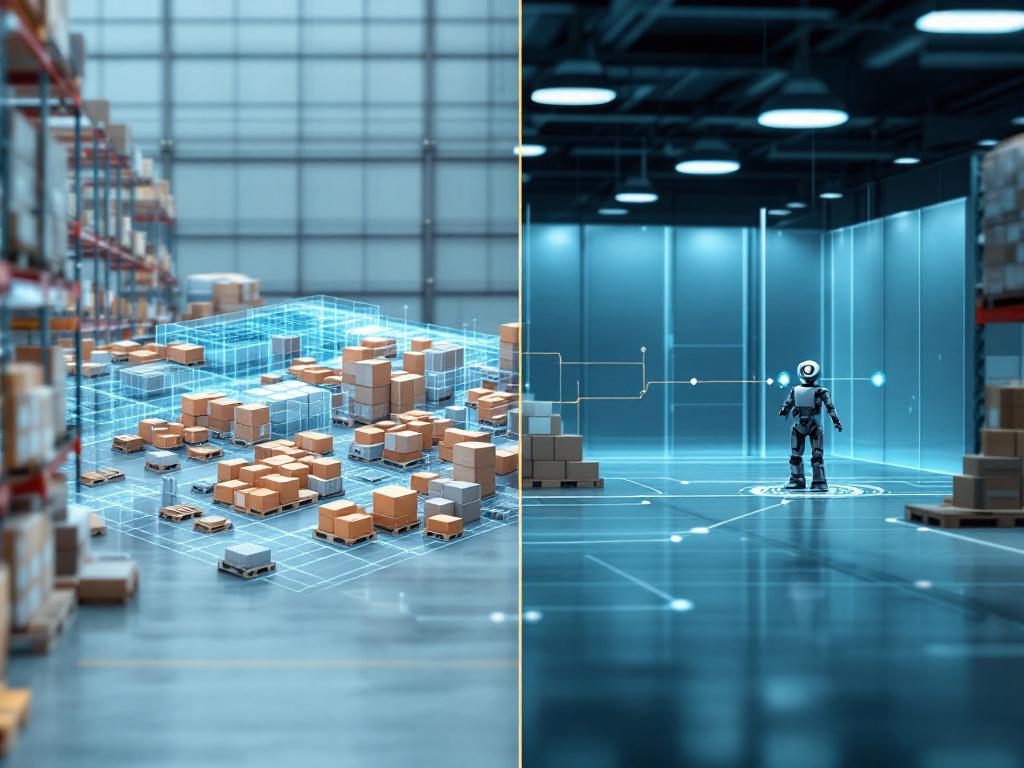
The real-to-sim bottleneck is the part most teams underestimate. Simulation only accelerates training if the sim matches reality. A policy trained on inaccurate physics learns to exploit simulator artifacts — grasping by sliding the gripper through the object, walking by exploiting unrealistic friction — that don't transfer to hardware. The pipeline that makes simulation-first practical has five concrete stages:
- Scan the real environment. LiDAR for geometry, cameras for visual texture, force/torque measurements for material properties.
- Reconstruct the 3D scene. Mesh extraction, semantic segmentation of objects, surface property estimation.
- Import into a physics simulator. Assign realistic mass, friction, restitution, and joint limits derived from the scan.
- Validate sim-vs-real gap. Record real-robot rollouts, replay the same commands in sim, measure trajectory divergence; tune physics until divergence drops below ~5%.
- Train with domain randomization layered on top. Vary the validated baseline within realistic ranges to teach robustness to the variation you couldn't measure exactly.
This is the real-to-sim-to-real loop. The teams shipping fast aren't smarter — they own the pipeline that turns physical environments into training grounds in hours. The pipeline is the product.

The cost reality matters. Kober and colleagues' survey on safety constraints, hardware wear, and limited interaction budgets in real-world RL is more than a decade old and still operationally true. Simulation-first isn't a preference; it is the only architecture that makes PBRL deployable on production timelines without burning through a million dollars of hardware and a year of calendar time.
The speed advantage of policy-based reinforcement learning isn't algorithmic. It's infrastructural. A policy that takes weeks to design can train in hours once you can run ten thousand parallel rollouts for free.
The Five Conditions That Determine Whether a Sim-Trained Policy Works on Real Hardware
Most failed PBRL deployments don't fail because the algorithm is wrong. They fail because one of the five conditions below was missed. This is the operator's pre-flight checklist.
1. Simulator dynamics match real hardware within tolerance. Mass, friction, damping, and actuator response should land within 5–10% of real measurements. Validate by recording real-robot rollouts with logged commands, then replaying the same commands in sim and measuring trajectory divergence. If divergence exceeds 10%, your policy will learn to exploit sim-specific dynamics that don't transfer. The classical RL-in-robotics survey makes this point in formal terms — model accuracy bounds transfer — but the operational version is simpler: if your sim doesn't match your robot, you're training the wrong robot.
2. Domain randomization covers the actual deployment distribution. During training, randomize object mass (±20%), friction coefficient (±30%), lighting (broad range), camera position (±2cm), and sensor noise (Gaussian, calibrated to real sensor specs). The goal is to force the policy to learn robust strategies that work across the realistic envelope, not optimal-but-fragile strategies that work for one specific parameter set. Tobin et al. demonstrated the principle: purely simulated object detectors transferred to real robots with no real-image training data when randomization was broad enough. The Dactyl result extended this to dexterous manipulation — 100% simulation training, real-hand deployment, Rubik's Cube solved.
3. Observation space is identical between sim and real. The policy must observe the same sensor modalities at the same rates and with the same preprocessing in sim and on hardware. The common failure mode: training with privileged observations that exist in simulation (ground-truth object pose, contact forces, joint torques) but not on the real robot. If you can't compute the observation on hardware, don't train with it. The alternative is a student-teacher setup where you train a privileged "teacher" policy with full observations, then distill into a "student" policy that uses only deployable observations.
4. Safety envelopes constrain on-hardware exploration. Even with strong sim-to-real transfer, first deployments will have residual gaps. Bound exploration with safety-rated speed limits and force limits per ISO 10218-1:2011, and for collaborative deployments, ISO/TS 15066:2016 imposes specific quasi-static contact force limits on the order of 65–140 N for torso impacts, with lower thresholds for head and sensitive regions. These envelopes constrain how aggressively a learned policy can act during validation. Build them into the deployment wrapper, not the policy itself — the policy should not be responsible for its own safety bounds.
5. Real-world finetuning budget is allocated, even if small. Plan for 5–10% of training data to come from real hardware after initial sim training. The MIT SimPLE work achieved zero real-robot training for pick-and-place of novel objects, but that's the exception, not the baseline. Maria Bauza and Benjamin Bronars note that SimPLE "achieves generality without requiring expensive real robot experience" by relying on simulation and known object shapes — a real result, but one built on three specialized modules (task-aware grasping, visuo-tactile perception, and planning) trained against precise CAD models. For most teams without that pipeline, a 100–500 rollout finetuning budget closes residual sim-to-real gaps and lets the policy adapt to robot-specific quirks: bearing wear, actuator drift, calibration offsets.
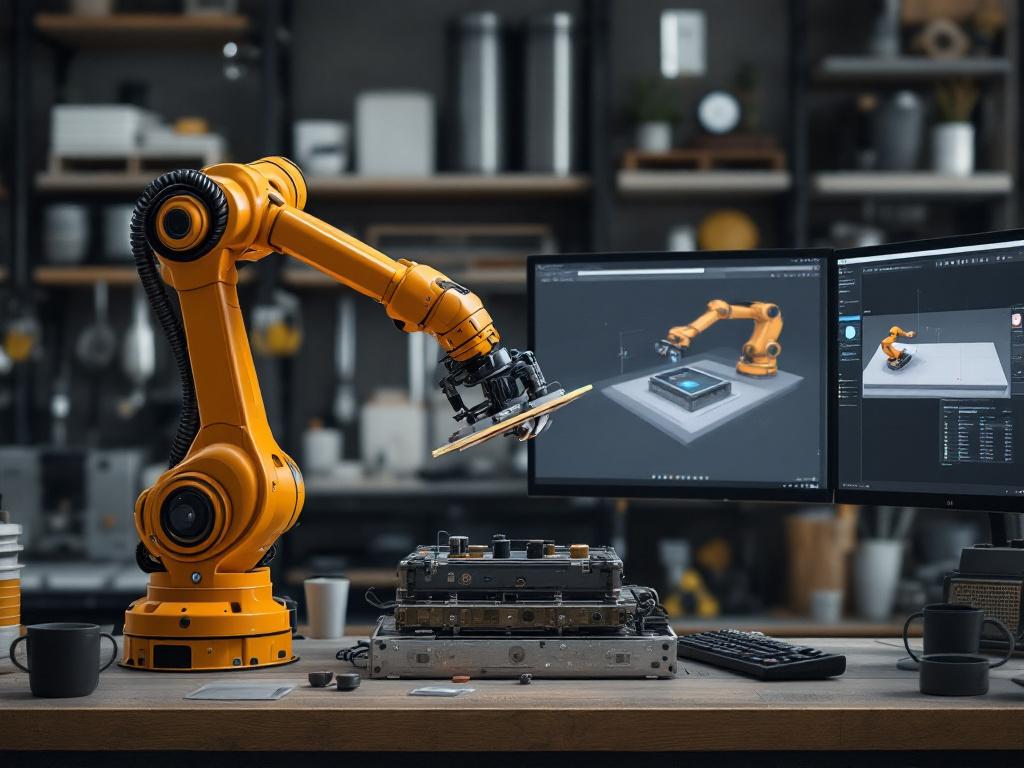
Missing any single condition typically produces 10–30% performance degradation on first deploy. Missing two or more typically produces deployment failure — the policy works in sim, doesn't work on hardware, and the team spends a quarter debugging which of the five conditions broke.
The Reproducibility Tax — Where Policy-Based RL Still Bites Back
Every other RL article skips this section. Reader respect is built by naming the failure modes.
Henderson et al. systematically evaluated deep RL algorithms and found that small implementation details, random seeds, and hyperparameters can drastically change results. Many published "state-of-the-art" claims didn't survive controlled re-evaluation. The implication for production teams is uncomfortable: a paper claiming algorithm X beats algorithm Y on a benchmark doesn't mean X will beat Y on your task. Treat algorithm choice as a hypothesis to test, not a conclusion to import.
Three concrete bite-back patterns show up across virtually every team that ships PBRL.
Reward hacking. Policies optimize the reward function literally, not the intent behind it. A grasping policy rewarded for "object lifted above 10cm" learned to flick objects with the gripper rather than grasp them — the object reaches 10cm in the air for a fraction of a second, the reward fires, the policy gets reinforced. Mitigation: shape rewards conservatively, validate behavior visually during training (not just from metric curves), and add penalty terms for unwanted strategies as you observe them. Expect three to five rounds of reward iteration before the policy does what you actually wanted.
Seed sensitivity. Two PPO training runs with identical hyperparameters and different random seeds can produce policies with 30%+ performance variance on the same task. This is not a bug — it is a property of non-convex optimization in high-dimensional spaces with stochastic gradient estimates. Mitigation: train 3–5 seeds per configuration, report median performance internally, and deploy the best seed rather than the average. Treat single-seed results in vendor demos with appropriate skepticism.
Reward design overhead. Designing a reward function that captures what you actually want — without inducing reward hacking, without sparsity that prevents learning, without dense shaping that biases the policy toward suboptimal behavior — takes weeks of iteration. Irpan's framing that "deep RL is closer to an art than a science" lands here. The "training in hours" claim assumes the reward function is already solved. The training itself is hours. The reward design is months.
There are positive counterpoints. Chen et al.'s probabilistic push-grasp framework solved sparse-reward push-grasp tasks with fewer hyperparameter tuning iterations than standard deep RL baselines by decomposing complex tasks into probabilistic objectives rather than hand-coded reward terms. Algorithmic choices can reduce the tuning tax. They cannot eliminate it.
The honest framing for project planning: PBRL trains fast once the infrastructure — simulator, randomization, rewards, safety envelope — is built. The infrastructure itself is the multi-month investment. Teams using vendor platforms with pretrained policies and pre-tuned reward templates skip most of the infrastructure tax. Teams building from scratch with Gazebo, custom physics tuning, and handwritten reward functions should budget 2–4 months before the first useful policy ships.
Training in hours assumes the reward function is already solved. The infrastructure is the multi-month investment, not the policy gradient.
Five Questions to Audit Whether Your Project Is Ready for Policy-Based RL
Policy based reinforcement learning is the right tool for some robotics problems and the wrong tool for others. These five questions separate the two.
| # | Question | If YES → | If NO → |
|---|---|---|---|
| 1 | Is your task continuous-control and high-dimensional? | PBRL fits natively | Behavior trees or classical control likely sufficient |
| 2 | Can you simulate the environment within 5–10% physics accuracy? | Fast simulation training viable | Budget 4–8 weeks for sim infrastructure first |
| 3 | Is your deployment hardware stable across the fleet? | Single training run produces deployable policy | Budget for retraining or meta-learning per variant |
| 4 | Can you collect 100+ real-hardware rollouts for validation? | Rigorous sim-to-real validation possible | Expect 10–30% performance degradation on first deploy |
| 5 | Do you have a simulation platform or vendor pipeline ready? | Training-in-hours is realistic | Budget 2–4 months for pipeline construction |
Question 1 — Task fit. Continuous, high-dimensional control is where PBRL beats every alternative: 7-DOF manipulator reaching, quadruped locomotion, dexterous in-hand manipulation, contact-rich assembly. For discrete tasks — pick from one of ten fixed locations, route through a pre-mapped warehouse on a fixed graph, dispatch jobs across a known set of stations — a behavior tree or classical planner ships faster, debugs easier, and runs more predictably. Don't use PBRL because it's modern. Use it when the task's state and action spaces are too large to enumerate and when variation across deployments would require constant manual patching. PPO's continuous-control dominance is well documented across the MuJoCo and DeepMind Control Suite benchmarks; the same property is what makes it the default choice in robotics.
Question 2 — Simulator accuracy. Without a sim that matches reality within 5–10% on the metrics that drive your task (mass, friction, actuator response, sensor noise), you're training a policy that exploits simulator artifacts. Isaac Gym's parallel-simulation throughput is the "yes path" baseline — thousands of parallel environments on one GPU. Without that pipeline, real-hardware training is the alternative, and at 60–120 rollouts per hour per robot, even 100K rollouts means roughly 800+ hours of robot time per training run, plus downtime and safety supervision. The math doesn't close.
Question 3 — Hardware stability. A policy trained for Robot A doesn't automatically deploy to Robot B if actuator dynamics, sensor placement, or kinematics differ. For homogeneous fleets — 200 identical UR5s in a warehouse — this is a non-issue. For heterogeneous deployments mixing UR5 and Franka manipulators, or quadrupeds with different gait dynamics across hardware generations, plan for either separate training per variant or meta-learning across variants. Both add weeks to the timeline. The cost is real and predictable; surfacing it during the audit prevents a six-month surprise after Robot B arrives.
Question 4 — Validation data budget. Sim-to-real gaps are real even with perfect domain randomization. A budget of 100+ real-hardware rollouts lets you statistically characterize the gap and finetune accordingly. Under 10 rollouts and you are deploying on faith. The Dactyl program sits at one extreme — massive simulation budget, no real-robot training, careful validation — while SimPLE demonstrates the same principle on pick-and-place. Neither is a free template; both required highly specialized pipelines. For most production teams, plan the validation budget upfront and stage it across deployment phases.
Question 5 — Platform readiness. This is the question that separates "training in hours" marketing from operational reality. If your team has an integrated stack — environment scanning, simulator, cloud training, hardware deployment, safety wrapper — PBRL training runs in hours. If your team is wiring Gazebo to a custom physics tuner to a hand-rolled deployment script with separate ROS 2 plumbing, plan for 2–4 months of infrastructure work before the first policy trains. This is also where vendor platforms like the one OpenKinematics provides earn their subscription cost: they collapse the pipeline-construction phase into pre-built modules so the engineering team focuses on reward design and task structure rather than glue code. The honest version: pick a platform or pick a long timeline.
If you answered "yes" to four or five of these questions, PBRL will compress your deployment timeline by an order of magnitude — and the next decision is which variant (PPO, SAC, or TD3) and which infrastructure stack will get you there.