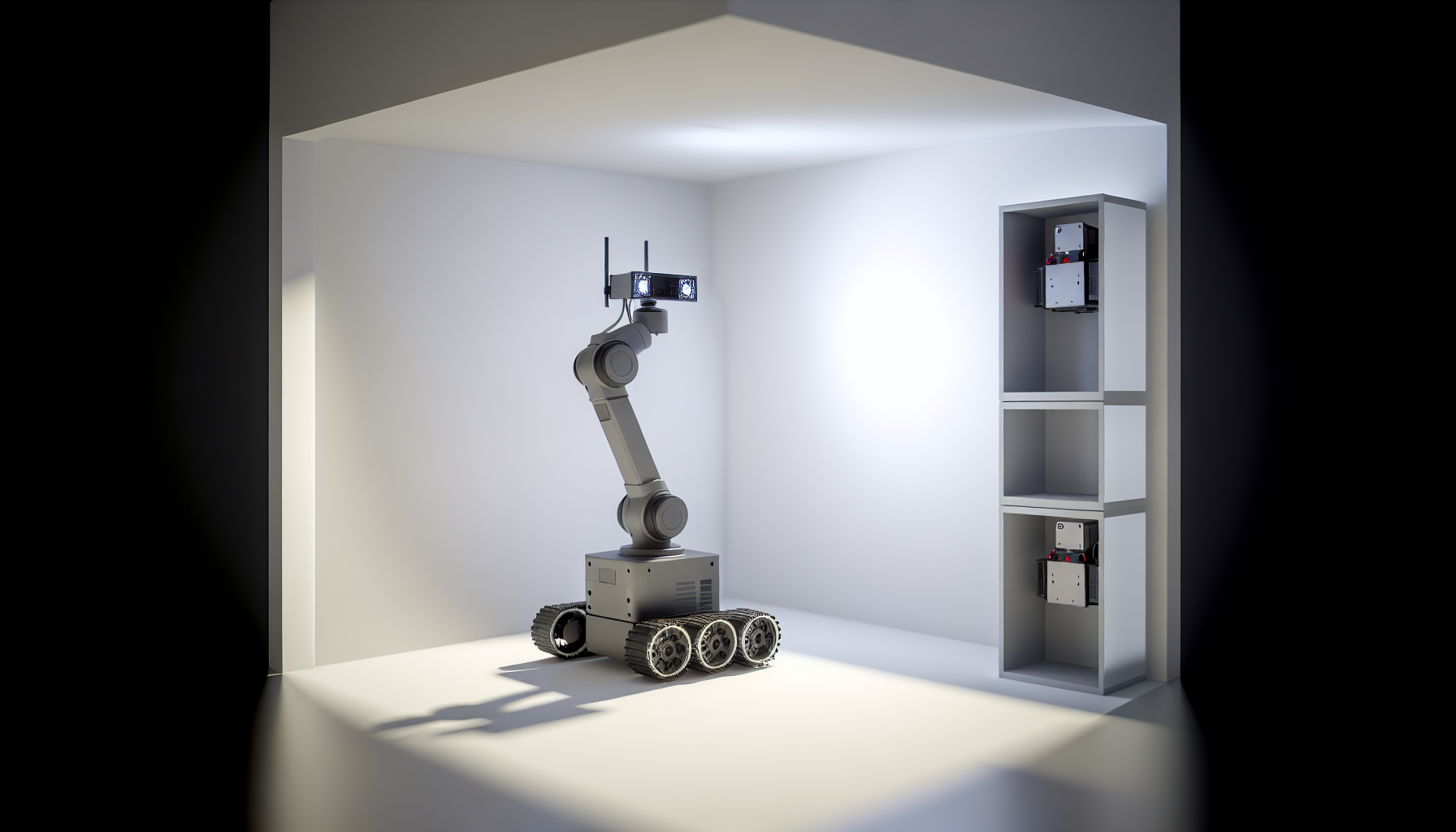
Enhancing Robot Navigation with Real-Time Environmental Mapping
Introduction
In today's technological landscape, robot navigation has emerged as a transformative force in the realm of robotics, underpinning advancements across a wide range of sectors. From seamless operations in busy warehouses to critical applications in healthcare and daring exploration missions, robot navigation plays a crucial role. As industries seek greater efficiencies and automation, the capacity of robots to navigate autonomously and adaptively becomes pivotal. This capability relies heavily on real-time mapping and sophisticated sensor fusion to promote informed and efficient decision-making processes.
Real-time mapping has significantly advanced, allowing robots to transcend beyond simple preprogrammed movements into adaptable entities capable of responding to changing environments. This evolution has been largely driven by improvements in processing capabilities and sensor technologies. This blog explores the intricate mechanisms guiding these advancements and their application across various domains, setting the stage for a future where autonomous robots become even more integral to our lives.
Understanding Robot Navigation
Robot navigation is the intricate process whereby robots sense their surroundings, construct environmental representations, and plan pathways, all while skillfully avoiding obstacles. It empowers robotics with the autonomy to operate independently, even in unstructured or dynamically changing environments, thereby reducing the necessity for human intervention.
The importance of robot navigation is underscored by its ability to enable robots to operate seamlessly in environments that might be unpredictable or difficult to map in advance. This is achieved through the use of sophisticated algorithms and sensor technologies, which allow robots to accurately perceive their surroundings and make informed navigation decisions.
Key Applications of Robot Navigation
- Autonomous Vehicles and Drones: These are increasingly used for outdoor traversal, utilizing GPS and a plethora of sensors to navigate complex environments. Their autonomous capability allows them to traverse long distances with precision and efficiency, making them invaluable in sectors like logistics and delivery.
- Industrial Robots and Mobile Manipulators: Frequently employed in warehouses and factories, these robots handle tasks such as material transportation and positioning. Their ability to autonomously navigate complex indoor environments enhances productivity and safety.
- Service Robots in Healthcare: In healthcare settings, robots assist in patient care, medicine delivery, and inventory management, contributing to the efficiency and reliability of medical services.
Understanding these applications highlights the pivotal role that robot navigation plays in modern industry, where optimizing efficiency and reducing human error are paramount.
Importance of Real-Time Mapping
Real-time mapping involves continuously constructing and updating a digital model of a robot's environment, making it vital for safe and efficient navigation in dynamic settings. This approach is particularly essential in environments where obstacles move or layouts change, requiring the robot to adjust its path on the fly effectively.
Benefits of Real-Time Mapping in Dynamic Environments:
- Low-Latency Decision Making: By allowing data to be processed on-site through edge AI, real-time mapping empowers robots to make split-second decisions critical for safety and efficiency.
- Enhanced Robustness: This approach provides robustness for operations in varied environments such as bustling urban areas or expansive warehouses, where conditions can significantly change.
- Efficient Trajectory Planning: By integrating new sensor data continuously, robots can optimize their paths for both efficiency and safety, ensuring tasks are completed swiftly and correctly.
The implementation of real-time mapping fosters an environment wherein robots can independently adapt to new conditions, paving the way for innovative applications across multiple sectors.
Environmental Mapping Techniques
Environmental mapping is integral to robot navigation, as it helps robots understand spatial layouts, obstacles, and available pathways in their operational environments. It involves creating structured representations through sensor data to enable intelligent navigation.
Core Mapping Techniques
- Occupancy Grids: By dividing space into a grid of cells marked as free or occupied, occupancy grids facilitate simple yet effective path planning.
- Simultaneous Localization and Mapping (SLAM): This sophisticated method involves building maps while simultaneously tracking the robot's position within them. It's exceptionally beneficial in unknown or dynamic environments to maintain awareness and precision in navigation.
- Sensor Fusion: By merging data from multiple sensors like LiDAR, cameras, and IMUs, sensor fusion offers a comprehensive perception of the surroundings. This approach helps handle both static and dynamic obstacles by utilizing diverse sensor inputs for accurate environmental understanding.
These techniques collectively enable robots to interact seamlessly with their environments, ensuring safe and intelligent operations across diverse settings.
Introduction to LIDAR Technology
LIDAR (Light Detection and Ranging) technology plays a monumental role in modern robot navigation. It functions by emitting laser pulses to measure distances, culminating in the generation of exceptionally precise point clouds that represent the robot's surroundings in two or three dimensions.
Advantages of LIDAR for Robot Navigation
- High Accuracy: LIDAR offers pinpoint precision in detecting obstacles and spatial mapping, even in challenging light conditions, making it invaluable for consistent navigation performance.
- Reliability in Complex Settings: Whether operating indoors or outdoors, LIDAR maintains reliability, outperforming alternative solutions that struggle with reflective or dusty environments.
- Facilitates 3D SLAM: By enabling precise 3D mapping, LIDAR supports occlusion avoidance and trajectory optimization, ensuring robust and efficient navigation.
These benefits make LIDAR an indispensable component within the toolkit of modern robotics, especially for applications requiring meticulous environmental analysis and navigation.
Navigation Algorithms and Their Role
Navigation algorithms are the computational backbone that processes sensor and map data to determine optimal paths, predict movements, and execute action maneuvers. These algorithms are critical for achieving efficient and intelligent robot navigation across varying landscapes.
Main Types of Navigation Algorithms
- Path Planning: Utilizes maps and machine learning to devise optimal trajectories. This type of algorithm can continually learn and improve based on past experiences, ensuring the most efficient route is always selected.
- Dynamic Obstacle Avoidance: This involves detecting obstacles in real-time and adjusting speed or direction to prevent collisions, ensuring fluid and safe movement through complex settings.
- SLAM Algorithms: These are integral for feature detection, map updates, and position estimation, leveraging sensor fusion for accuracy in real-time navigation.
- AI-Enhanced Navigation: Incorporating AI, particularly reinforcement learning, these algorithms enhance adaptability in unstructured environments by learning from past navigational challenges.
These diverse algorithms work collectively to empower robots with the ability to navigate autonomously and intelligently across a myriad of environments.
Integration of Technologies for Effective Navigation
Integrating technologies for robot navigation, such as real-time mapping, LIDAR, and advanced navigation algorithms, requires frameworks like the Robot Operating System (ROS). This integration enhances robot perception and decision-making capabilities through sensor fusion and sophisticated computational processing.
Real-World Examples of Integration
- Warehouse AMRs: Autonomous Mobile Robots (AMRs) in warehouses leverage LiDAR and SLAM for dynamic obstacle avoidance and trajectory planning, ensuring efficient and safe operations.
- Robotnik Mobile Robots: These utilize 3D SLAM for precise localization and navigation in industrial settings, optimizing operational efficiency and safety.
- Autonomous Vehicles: Combining LIDAR, GPS, and advanced AI allows these vehicles to navigate urban environments proficiently, autonomously adapting to traffic and pedestrian conditions.
Such examples underscore the transformative power of technology integration in robot navigation, paving the way for innovative and advanced applications.
Challenges and Future Trends
While robot navigation has made substantial strides, several challenges persist. These include managing variable environmental conditions, high computational requirements, and reliance on sensor quality. Addressing these challenges involves ongoing research and technological advancements.
Future Trends in Robot Navigation
- Advanced Sensor Fusion: This technique is anticipated to evolve with quantum and 3D imaging, enhancing precision and reliability across varied environments.
- AI-Driven SLAM: Leveraging deep learning, SLAM will become more adept at handling dynamic and complex spaces, further enhancing mapping and navigation accuracy.
- Edge Processing and VSLAM: These facilitate cost-effective solutions that are robust under varied lighting conditions, promoting broader adoption and application.
Embracing these trends will drive the continuous evolution of robot navigation technologies, expanding their impact and capabilities across industries.
Conclusion
In conclusion, the fusion of real-time mapping, environmental mapping, LIDAR technology, and sophisticated navigation algorithms is vital for robust robot navigation. These technologies collectively empower autonomous robotics to operate efficiently and safely across diverse applications, driving innovation across industries. As the field of robotics continues to evolve, ongoing advancements in these areas promise even greater autonomy, adaptability, and integration of robots into daily life.
Call to Action
Stay updated on the latest developments in robot navigation and autonomous technologies. Subscribe to receive insights and updates on the groundbreaking advancements shaping the future of robotics. Join us as we explore the exciting possibilities of tomorrow’s robotic innovations.
FAQs
1. What is the role of edge AI in robot navigation?
Edge AI allows robots to process data and make decisions locally with minimal latency. This is crucial for real-time navigation where quick responses to environmental changes are essential for efficiency and safety.
2. How does AI enhance robot navigation in unstructured environments?
AI, particularly reinforcement learning, enables robots to learn from environmental interactions. This allows them to enhance their navigation strategies and adapt to new challenges over time, improving performance in unstructured settings.
3. What are some practical applications of SLAM in everyday life?
SLAM is used in vacuum cleaning robots to map and navigate home spaces, in self-driving cars for route optimization, and in drones for map creation in exploration missions, demonstrating its versatility and utility.
4. Why is sensor fusion important for robot navigation?
Sensor fusion enhances accuracy and reliability by combining data from multiple sensors, enabling comprehensive environmental awareness. This is critical in complex environments where no single sensor can provide complete information.
5. What future advancements might we expect in robot navigation technology?
Future advancements include more sophisticated AI integration, improved sensor technology, and enhanced processing capabilities. These will pave the way for more autonomous, adaptable, and efficient robotic systems, expanding their applicability and effectiveness across various domains.