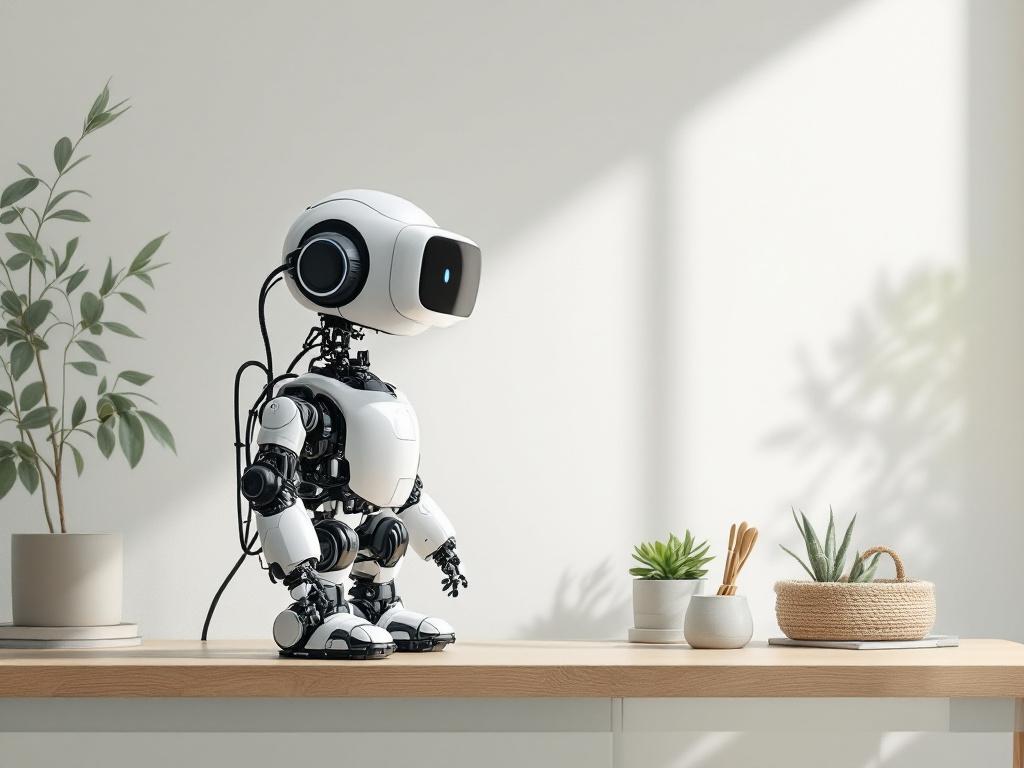
How Augmented Reality is Revolutionizing Robot Training
Augmented reality (AR) has emerged as a transformative technology that overlays digital information onto the real world, bringing to life immersive experiences across several sectors. Industries such as manufacturing, healthcare, and education are increasingly benefiting from the power of AR by engaging users in ways that were previously unimaginable. By seamlessly blending the digital and physical realms, AR facilitates intuitive interactions, making processes more efficient and effective. Within the realm of robot training, AR is not just an enhancement; it is a revolution.
In traditional robot training, methods like kinesthetic teaching required direct physical interaction, which was often cumbersome and limiting. However, with augmented reality, these conventional approaches undergo a substantial transformation. AR enables tutorials and training experiences that leverage hand gestures and visualizations, avoiding the need for physical contact entirely. This innovative approach ensures that the training process is interactive and engaging, allowing users to guide and train robots more naturally and effectively.
Overview of Augmented Reality (AR)
At its core, augmented reality (AR) involves the integration of digital elements into the physical environment, usually through devices like iOS applications or advanced head-mounted displays. These digital enhancements can take various forms, such as 3D models or dynamic trajectories that align perfectly with the physical objects they augment. This convergence of the digital and tangible spheres enhances various industries, notably in contexts like robot programming, posture training, and educational sectors.
For instance, in robot programming, AR is employed to mirror human gestures, facilitating the teaching of complex tasks to robotic arms. In rehabilitation, it aids in posture training by augmenting exercises with real-time feedback, thereby improving outcomes. In education, AR offers a three-dimensional visualization of robot motion, illustrating degrees of freedom that enrich the learning experience.
The advantages of augmented reality are immense. Compared to traditional 2D interfaces, AR significantly boosts user engagement. Tasks are completed more swiftly, with studies showing up to a 62% increase in speed, while accuracy improves by 16%. These improvements not only make tasks faster but also ensure a higher quality of execution, thereby driving productivity.
The Role of Augmented Reality in Robot Training
Augmented reality proves to be particularly well-suited for robot training, offering a unique approach that allows demonstrations to be conducted without the need for physical robots. This capability opens up training to a broader audience, including those who may not have stringent technical expertise, by allowing them to collect demonstrations through simple hand waypoints and trajectory visualizations.
One of the standout features of AR in this context is its ability to create immersive environments. By synchronizing user motions with robotic actions, these sessions become much more natural, paving the way for more efficient training outcomes. Whether it's cleaning tasks or complex manufacturing processes, the ability to mimic real-world actions without physical constraints unlocks new potential in both stationary and mobile robotic systems.
Moreover, AR's adaptability shines through in its support for various types of robots and configurations. It can accommodate stationary arms or work with mobile robots, encouraging a dynamic learning environment. This adaptability means that users can engage in bimanual control tasks or collect multi-view data, further enhancing the depth of the training experience.
Interactive Training through AR
Interactive training through augmented reality introduces a paradigm where robots and users collaborate in real-time. This form of training is marked by direct collaboration, ensuring that the workload is significantly reduced while the quality of demonstrations is enhanced. By enabling users to experiment with different trajectories and motions, AR breaks down complex tasks into manageable parts, thus simplifying the learning process.
The effectiveness of AR-enhanced interactive training lies in its ability to overlay planned trajectories right into the user's line of sight. This feature allows for real-time adjustments—users can preview and modify paths, utilizing functionalities like redo buttons to tackle even the most intricate tasks efficiently.
Consider the example of the EVE app, which allows users to specify hand waypoints for tabletop tasks. Such applications not only outperform traditional methods regarding success rates but also punctuate the transformative impact AR has in the realm of robot training. Further, AR hardware captures and interprets gestures with high accuracy, bridging the gap between human intentions and robotic execution.
Virtual Environments for Robot Training
Virtual environments, when bolstered by augmented reality, offer a safe and repeatable setting for conducting robot training without the risks associated with physical hardware. These environments simulate real-world conditions, allowing trainees to conduct exercises repeatedly to hone their skills without damaging expensive equipment.
Augmented reality enhances these virtual settings by converting human actions into tangible 3D trajectories. This capability is invaluable for tasks like precision calibration or visualization, where accuracy and exactness are paramount. For example, applications like AR2-D2 project virtual robot poses onto their physical counterparts, aiding in seamless calibration and task planning.
The flexibility of these augmented virtual environments allows for the testing of various functionalities, such as manipulation precision in diverse settings. Real-time feedback mechanisms provide invaluable insights into joint orientations and overall system performance, enabling continuous improvement and iteration in the training process.
Advantages of Using AR Technologies in Robot Training
The integration of AR technologies in robot training brings forth numerous advantages that reflect both improved efficiency and reduced costs. One of the most significant benefits lies in the potential to conduct training sessions without the need for actual physical robots. By allowing digital twins or simulations to stand in for costly hardware, AR reduces overheads, making training more accessible.
Efficiency is another substantial advantage, with AR matching or even surpassing kinesthetic teaching methods in both time and usability metrics. Teleoperation over traditional models becomes more intuitive, minimizing friction in the robot training journey. With augmented reality, users can interact and sync directly with real-time trajectories, adjust course for improved accuracy, and harness planning utilities for seamless task execution.
Improved learning outcomes are also a notable benefit of AR-enhanced training. Studies point to higher success rates, whether it's mastering motor skills in robot-assisted posture training or adapting to advanced robotic controls. Additionally, users report a preference for the AR interface, further underscoring the modality’s effectiveness as a training tool.
Challenges and Future of AR in Robot Training
Despite its many advantages, augmented reality in robot training is not without its challenges. Current limitations include constraints on task diversity and difficulties in achieving bimanual precision under AR settings. Additionally, some users might experience simulator sickness, albeit less frequently with AR compared to virtual reality setups.
Overcoming these hurdles is essential for unlocking the full potential of AR in robot training. Potential solutions include the use of advanced AR headsets that provide enhanced depth cues and enable bimanual control. Motion planners and sophisticated algorithms will bring variability to tasks while addressing issues that might arise due to different user proficiencies.
Looking to the future, innovations in integrating AR with robotic vision systems or artificial intelligence represent intriguing possibilities. As these technologies evolve, they could significantly improve performance in unstructured environments, laying the groundwork for AR's fusion with AI in smart factories. These innovations could redefine production landscapes, enhancing precision and productivity.
Transforming Robot Training with Augmented Reality
Augmented reality is reshaping robot training, improving it through intuitive demonstrations and immersive simulations. These tools significantly outperform traditional interfaces by delivering superior usability and overall outcomes. The reach of AR is expanding, making robot training accessible not only to experts but also to those who might lack deep technical skills.
The adaptability of augmented reality across various robotics applications positions it as a vital tool for the future of robot training. Whether it's a novice learning the basics or a skilled operator refining their technique, AR provides a platform that enhances understanding and operational proficiency.
Engage with Augmented Reality in Training
As the landscape of robot training continues to evolve with augmented reality at the forefront, engagement with this technology becomes increasingly important. Whether you have firsthand experience with AR in your training sessions or are exploring the concept for the first time, sharing insights and information about its application is invaluable.
Encourage interaction by exploring further studies and resources that delve deeper into the potential and capabilities of AR in robot training. By embracing these opportunities, you pave the way for a new era of learning, powered by augmented reality.
Q1: How does augmented reality differ from virtual reality in robot training?
Augmented reality overlays digital information onto the real world, allowing users to interact with both simultaneously. In contrast, virtual reality wholly immerses users in a digital environment, often excluding the outside world. This makes AR particularly useful in robot training, where real-world interactions and spatial awareness are crucial.
Q2: What devices are typically used to experience augmented reality in robot training?
Devices commonly used for AR in robot training include head-mounted displays like AR headsets, as well as smartphones and tablets equipped with AR applications. These devices enable users to view and interact with digital augmentations layered over their real-world environment.
Q3: Can AR in robot training be applied to industries outside manufacturing?
Yes, AR in robot training is applicable across various industries. In healthcare, for example, AR can assist in surgical planning or rehabilitation exercises. Educational sectors use AR for teaching robotics concepts, while other areas can benefit from improved training protocols facilitated by AR.
Q4: Does AR technology require specific software skills to use effectively?
While some background in software handling can be helpful, modern AR solutions often come with intuitive interfaces that require little to no prior knowledge. As technology progresses, the design of user-friendly AR applications continues to improve, making it accessible for people with varying levels of technical expertise.
Q5: What are the security implications of using augmented reality in robot training?
Security remains an important consideration in the deployment of AR solutions. Safeguards must ensure data integrity and privacy, especially when handling sensitive information or proprietary algorithms. Robust security measures and an understanding of cybersecurity principles are necessary when integrating AR into any training framework.